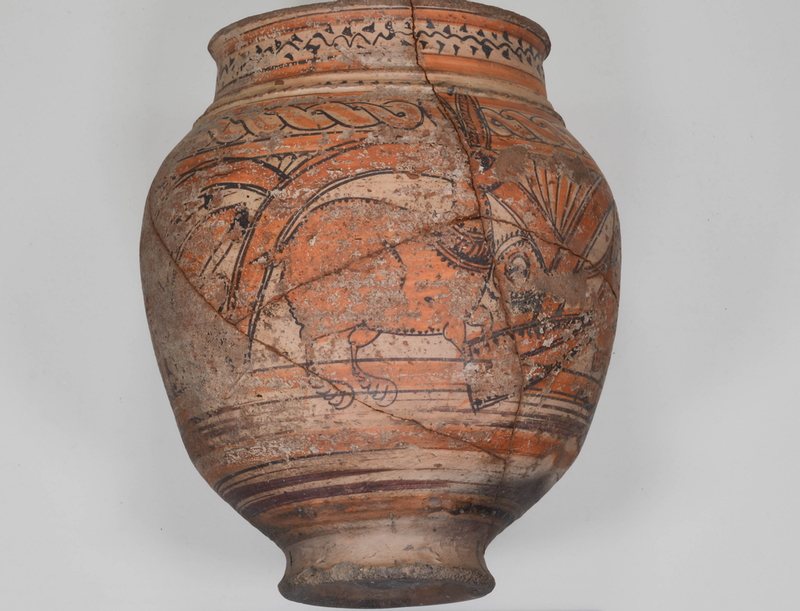
This painted jar, dating from the late Roman period to the beginning of the Byzantine period, offers a glimpse into the material culture of ancient Egypt. The most captivating feature of the jar is a wide band that spans the main body. It is divided into five...
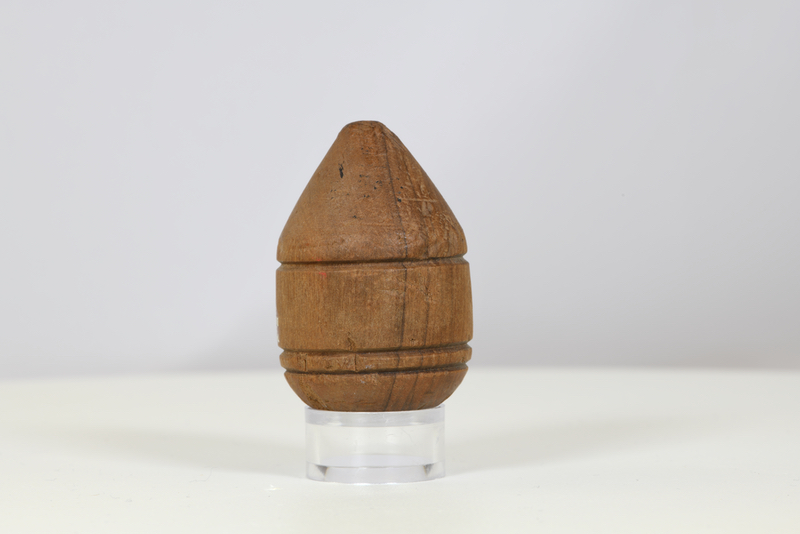
This small wooden top is an example of an “action toy” excavated from Karanis. Toys like this one, similar to designs today, developed children’s sensorimotor skills. The wooden top could have been used for either individualized play or in group...
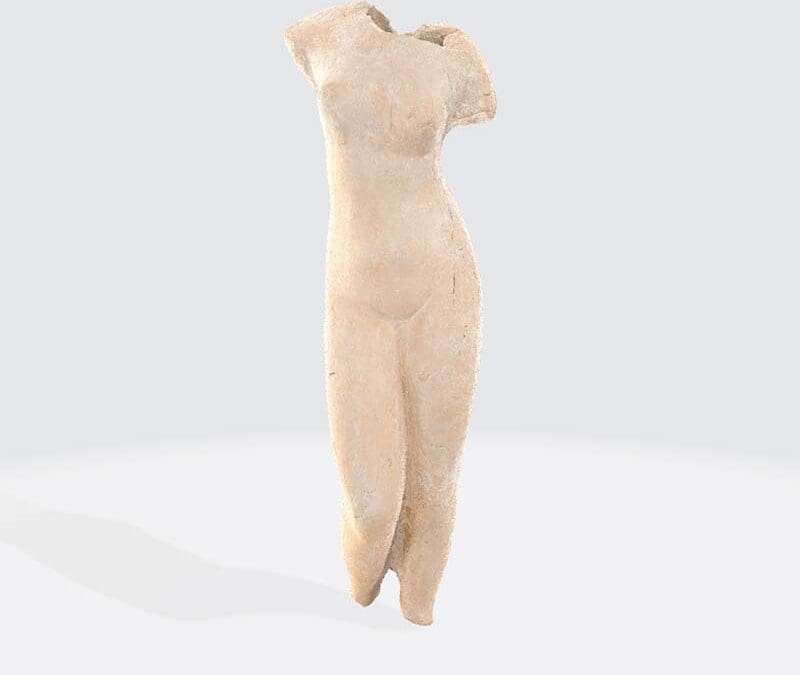
This terracotta figurine represents Aphrodite, the goddess of love. During Egypt’s Graeco-Roman period, Aphrodite held a prominent place in both mythology and religious worship. Known for her association with beauty, femininity, and romance, Aphrodite was...
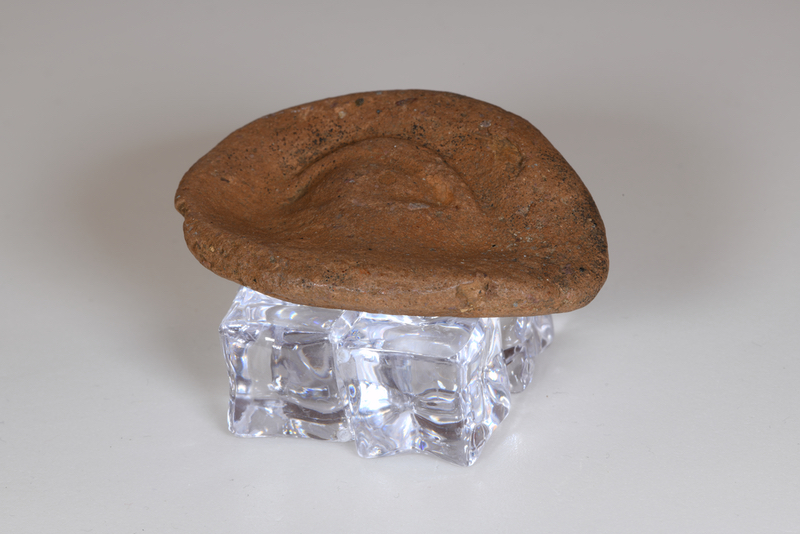
This clay eye is an example of an anatomical votive most likely dedicated to a healing deity. The dedicator of this clay eye may have been vision impaired and was seeking help from a healing god, such as Asclepius. Practically any body part that was in need of healing...
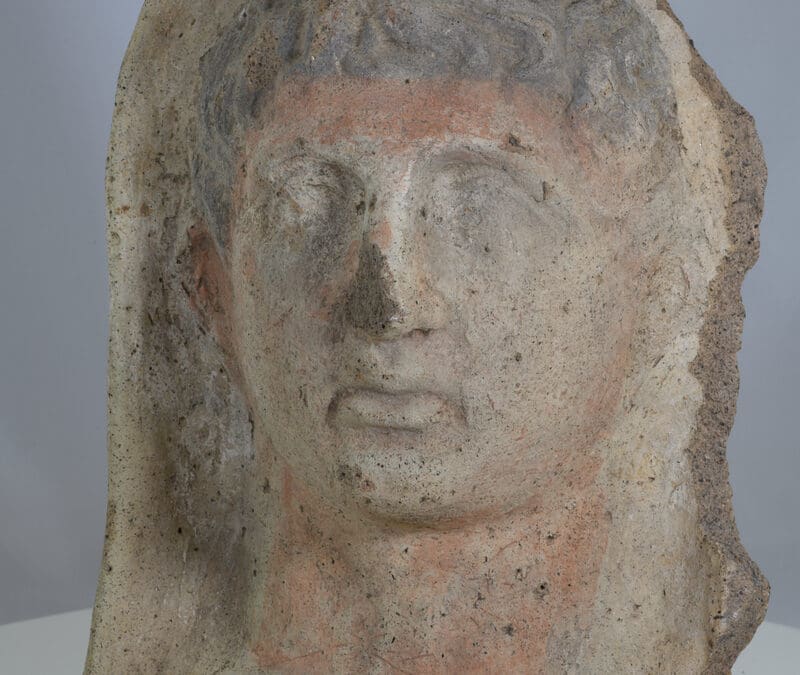
This is a Roman male votive figurine from the Republican period that has traces of black and red paint. There is also a small hole on the backside of the figurine that could have been used for hanging the portrait.
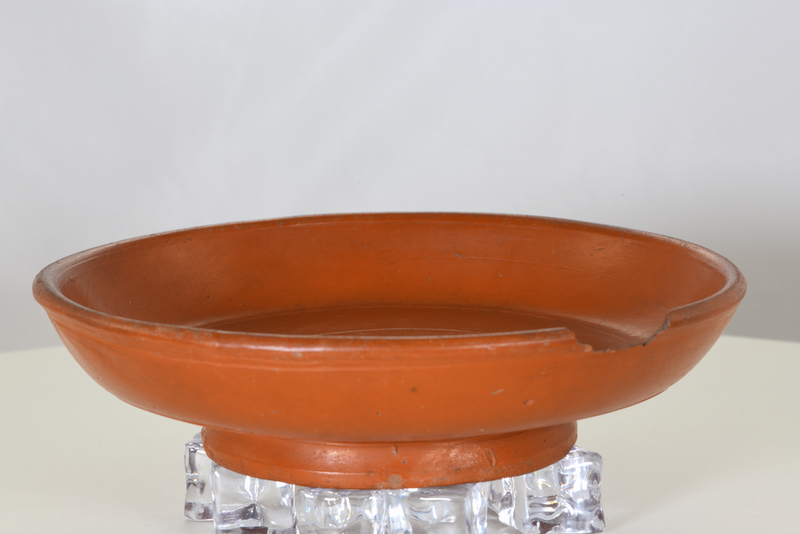
This bowl is an example of terra sigillata tableware which was popular in Italy and Gaul. Terra sigillata can be reconginzed by its glossy surface slip which can range in color from pale orange to bright red. At the center of the vessel, within two circles, is the...
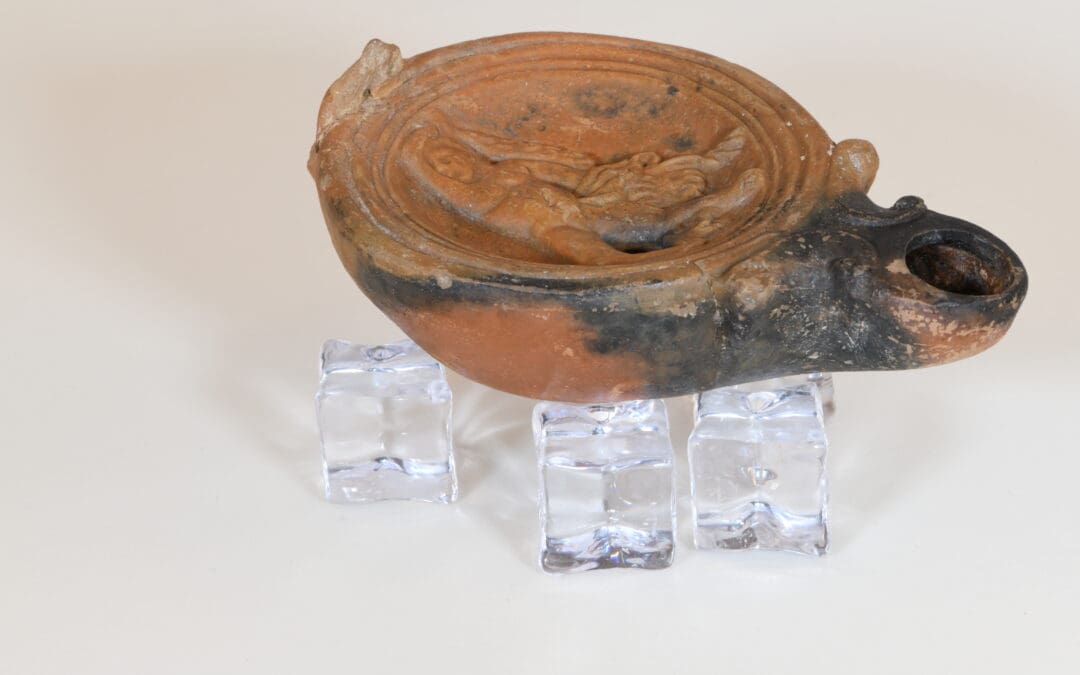
This terracotta oil lamp is an example of a Roman relief lamp, a type of decorative lamp that features relief ornamentation on the body’s concave upper surface, known as the discus. This particular type of lamp originated in ancient Italy and was later adopted and...
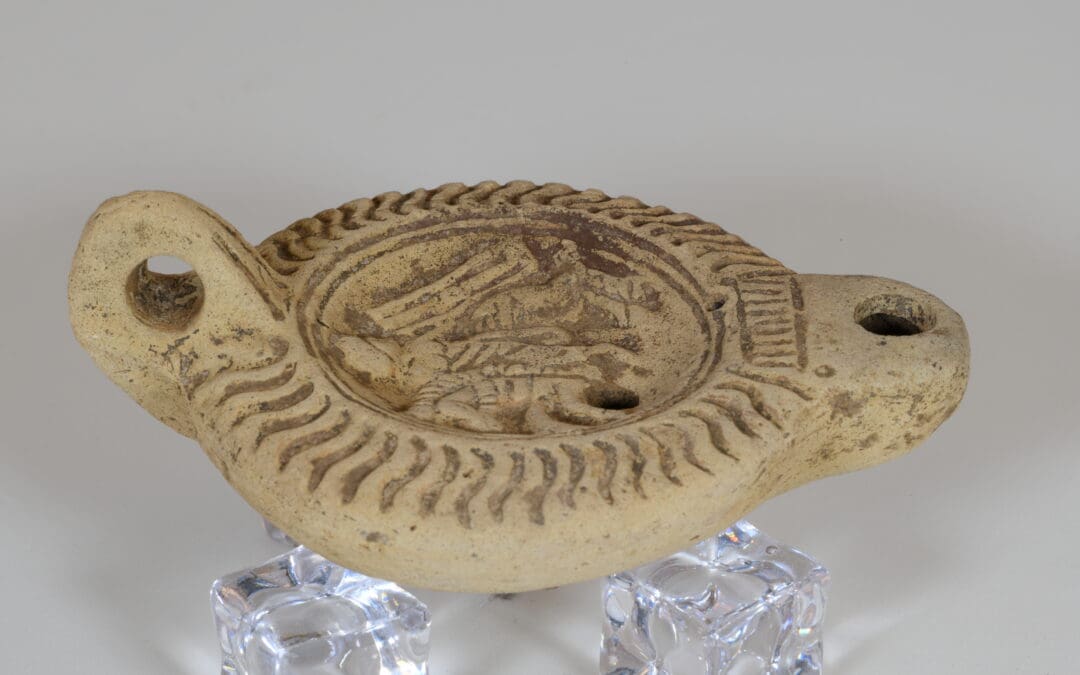
This lamp is an example of a Roman relief lamp, a type of decorative lamp that features relief ornamentation on the body’s concave upper surface known as the discus. This particular type of lamp originated in ancient Italy but was later adopted and copied throughout...