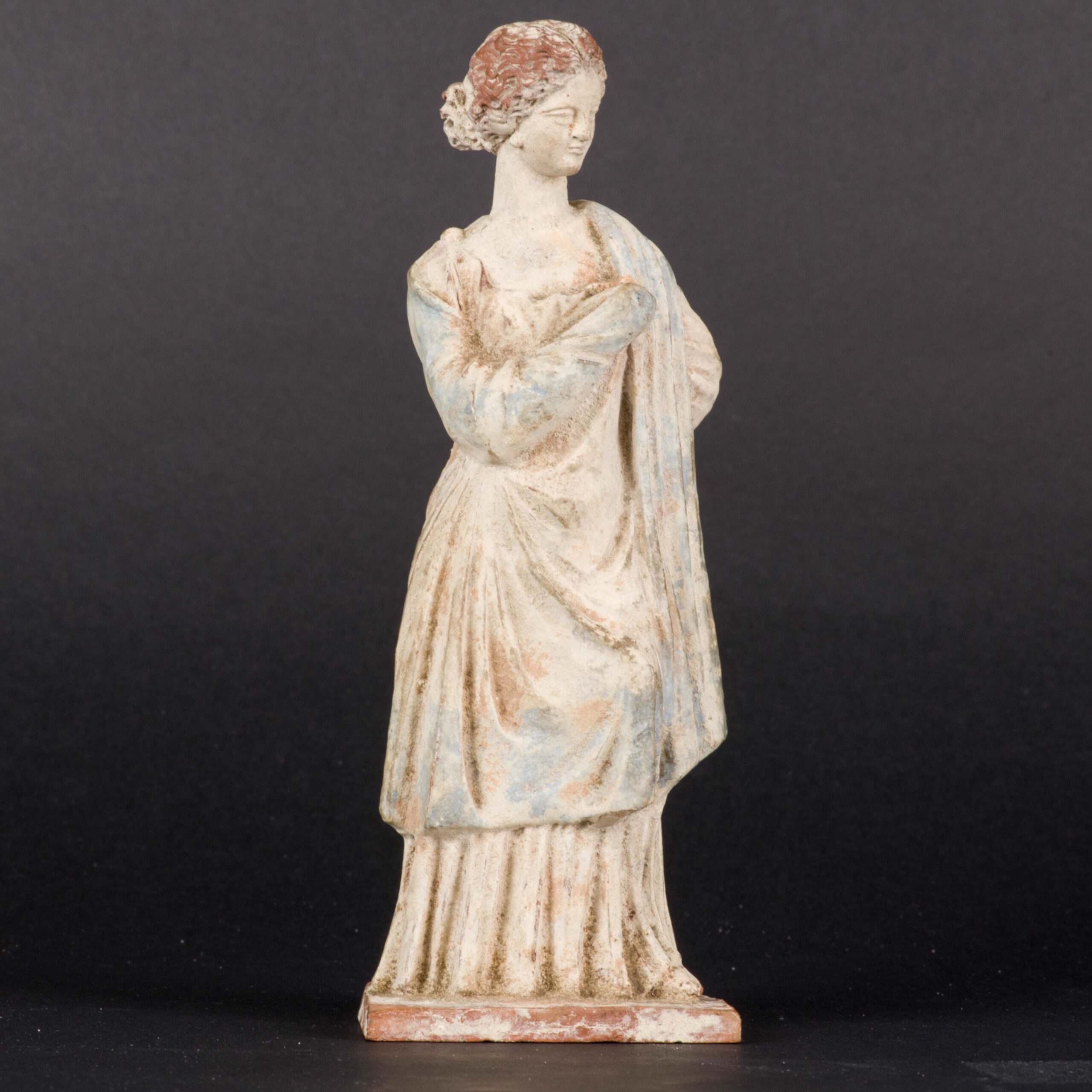
Ceramic figurine of a young woman. She wears a long, simple dress known as a chiton with a blue himation or cloak. Such figurines were common around Greece and the broader Mediterranean. They offer a rare glimpse in the daily life of women in the ancient...
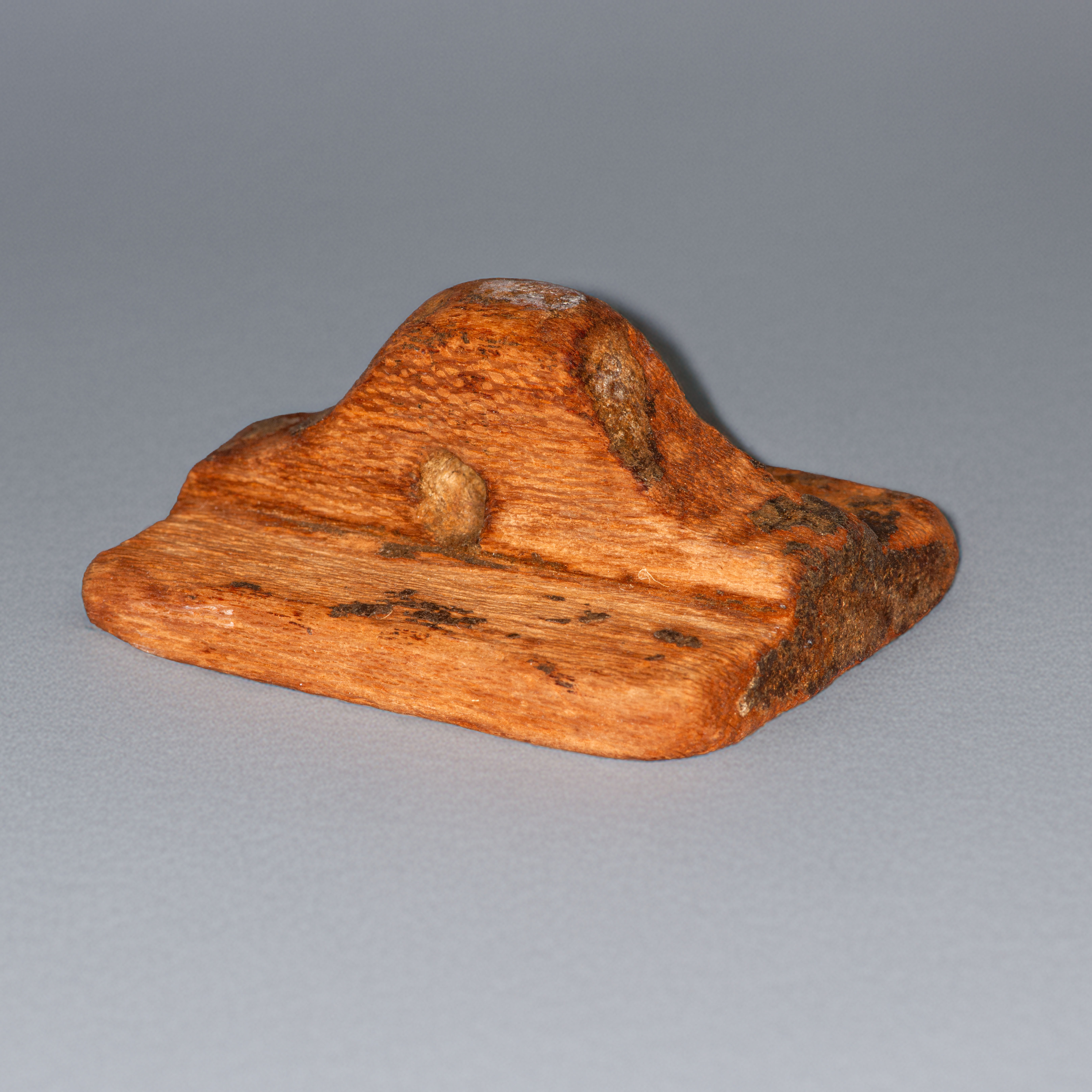
This wooden stamp comes from Karanis in Egypt, and dates to sometime between the 1st century BCE and the 4th century CE. In the ancient Mediterranean, bread formed a central part of peoples’ daily diet and, as in many places of the world still today, while dough was...
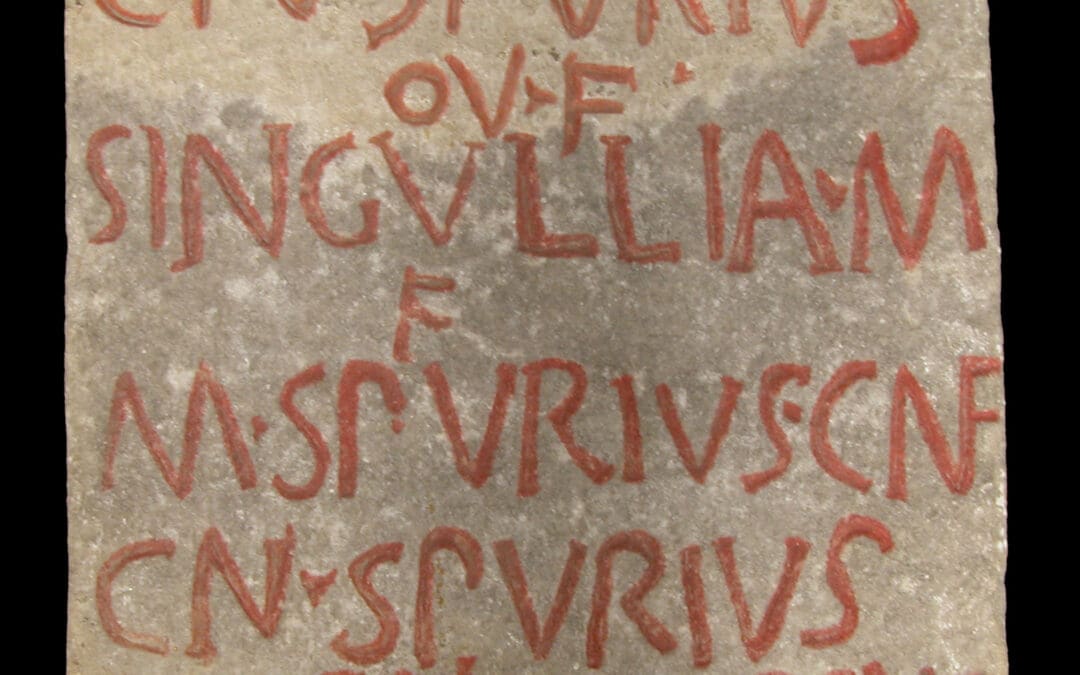
This tombstone for the Spurius family is a rare example of a Republican-period inscription from the Bay of Naples, but it shows some facets that became standardized in later tombstones. The grouping of relatives together in a large tomb was a common practice to...
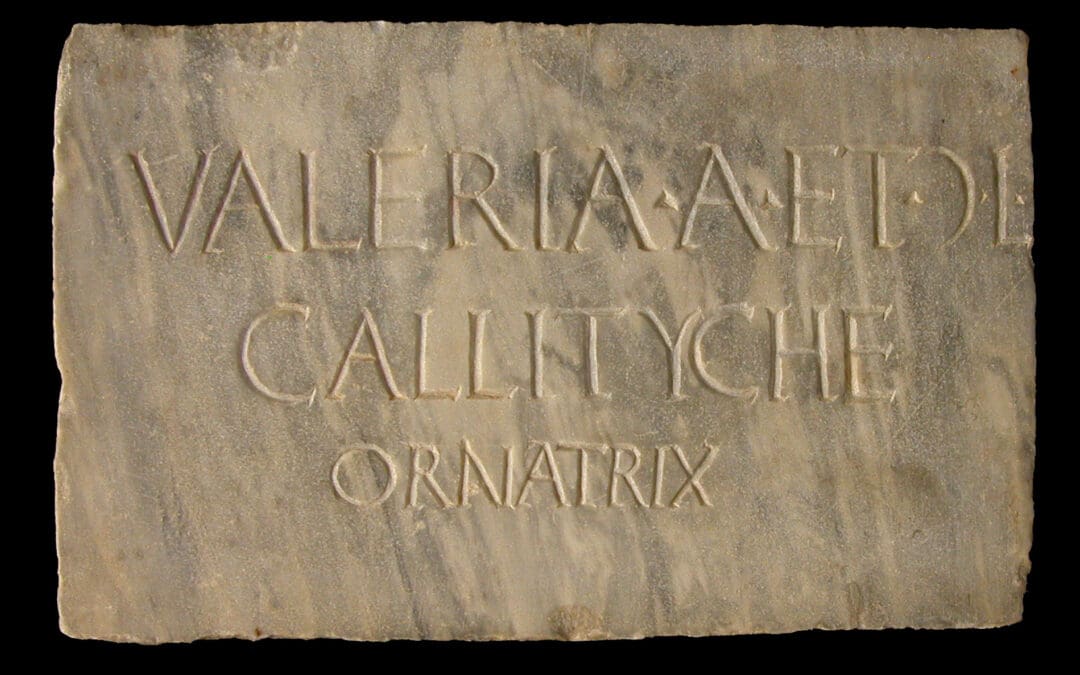
Funerary inscription of Callityche, a hairdresser (“ornatrix”) from the town of Puteoli on the Bay of Naples, in Italy. Callityche was formerly enslaved by Aulus and Gaia Valerius. We don’t know if Callityche, which means “good luck” in...
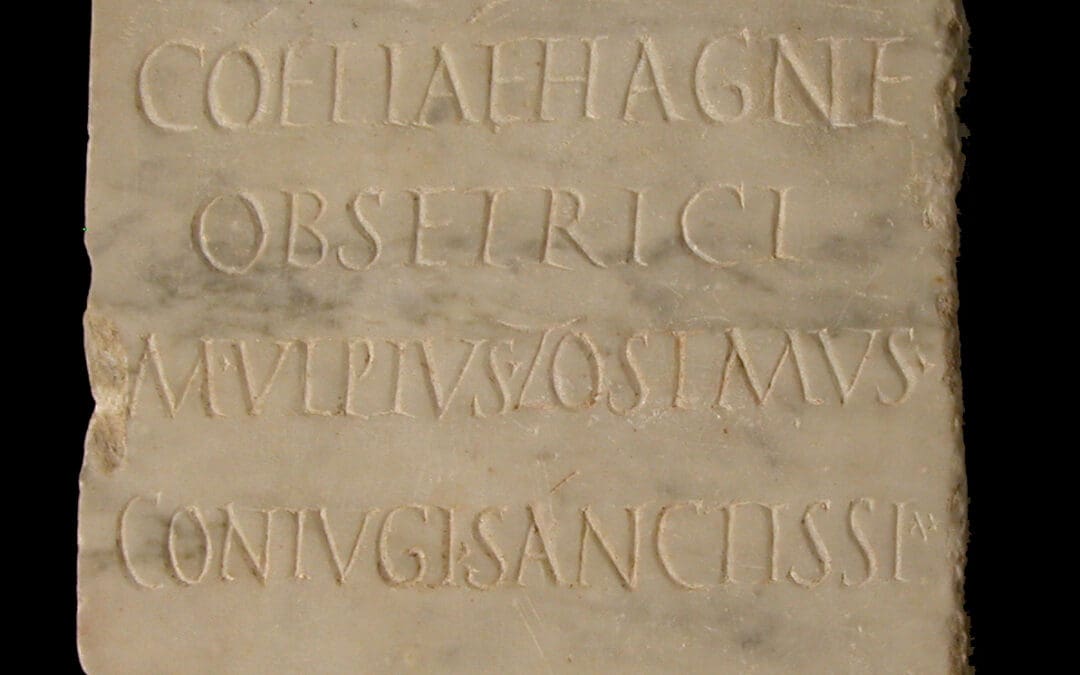
Funerary inscription of Coelia Hagne, a midwife (“obstetrix”) who lived in the area of Puteoli, on Italy’s Bay of Naples, in the 2nd century CE. This monument was dedicated to her by her husband, Marcus. Midwives like Coelia played a vital role in...
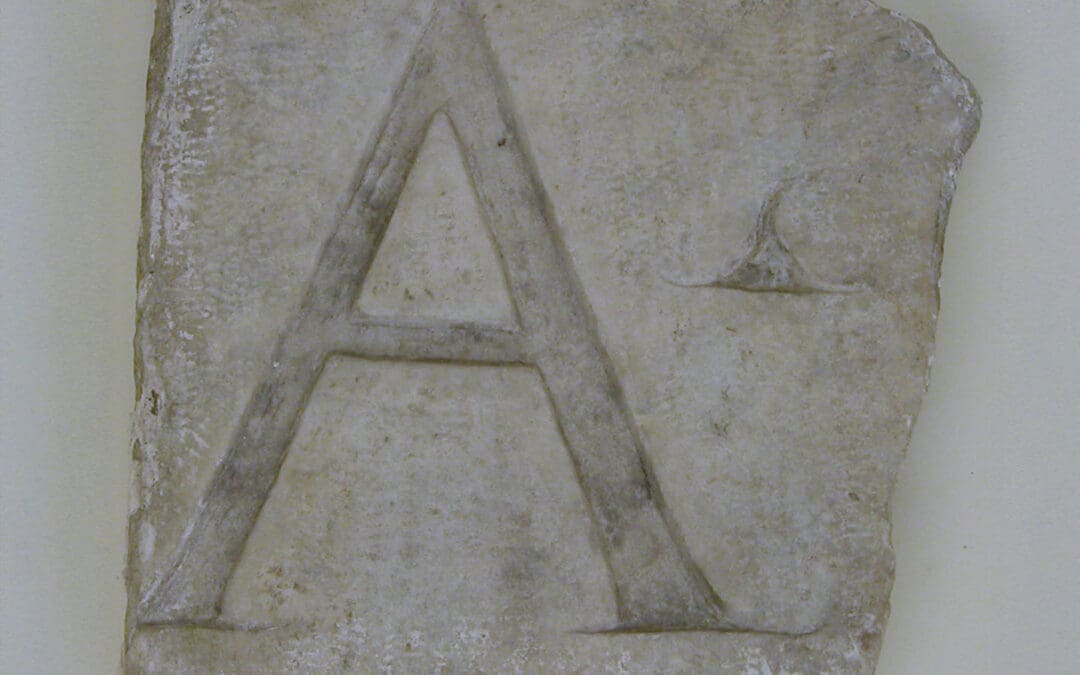
Portion of a monumental public inscription preserving only one letter and an interpunct (a dot separating letters and/or words in ancient inscriptions). The edge to the left of the “A.” is straight and the back shows possible traces of attachment,...
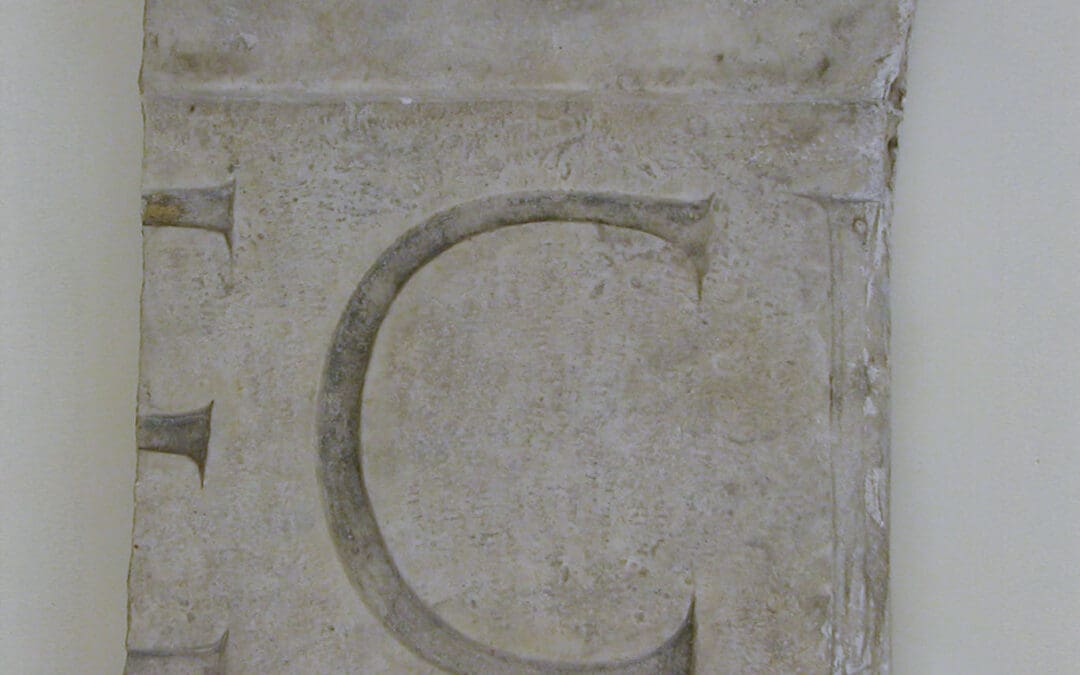
Portion of a larger monumental public inscription. This fragment preserves one complete letter and two partial letters from the middle of the honoree’s nomen (family/clan name). Chisel marks are visible on the surface of the stone, revealing how it was first...
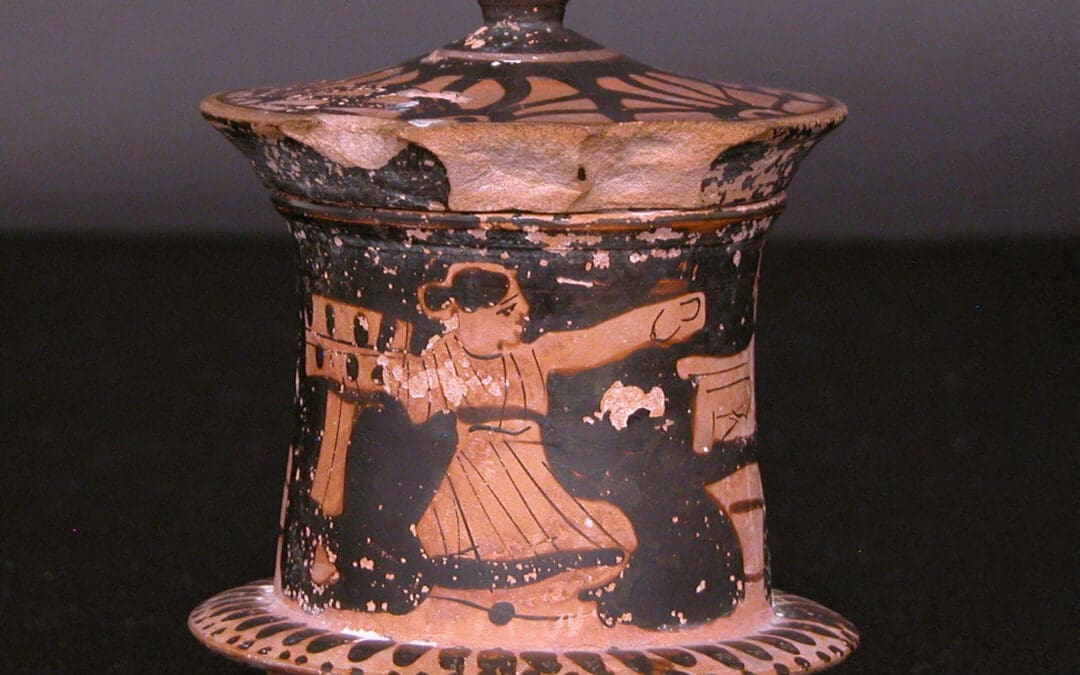
This ceramic object is a pyxis, a small cylindrical container with a fitted lid often used by ancient people to store small items such as jewelry or cosmetics. This example depicts two women and an eros (cupid); one woman looks at herself in a mirror while the eros...
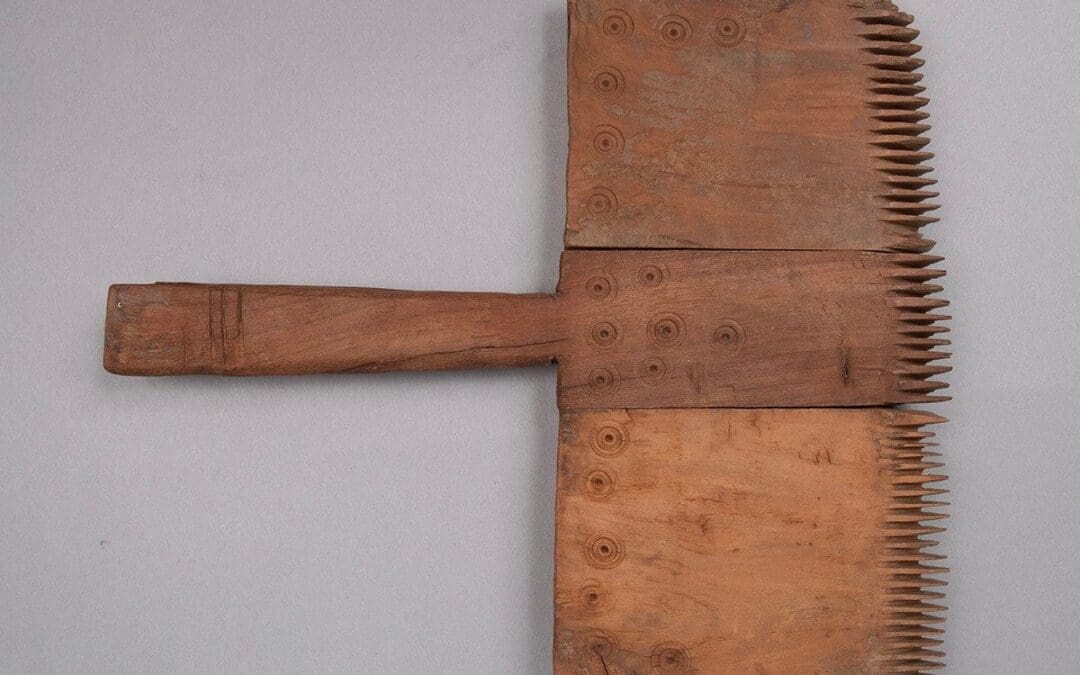
Weaving combs are used to beat or compress weft yarns against previous rows, ensuring that the final textile has a consistent density. This large weaving comb was made from three pieces of wood joined with pegs, decorated with a concentric circle design. It is one of...
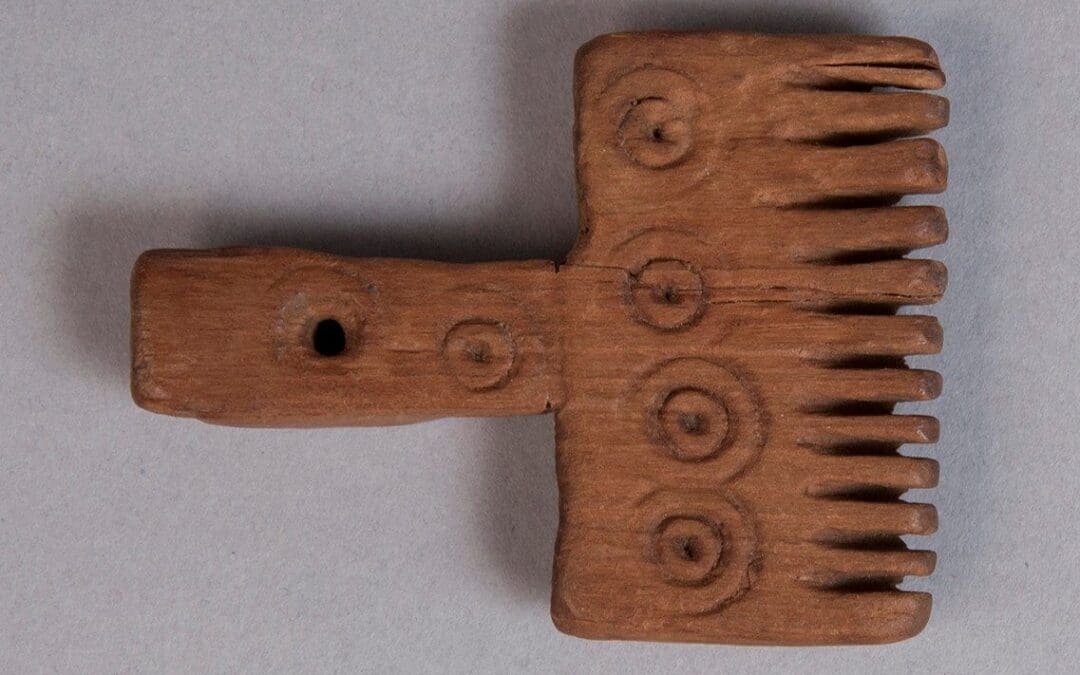
This is a miniature comb, excavated from Karanis, that was most likely used in children’s play activities. Today, many children play with miniatures of “adult” objects to learn behaviors and mimic social interactions; this comb may have served a...