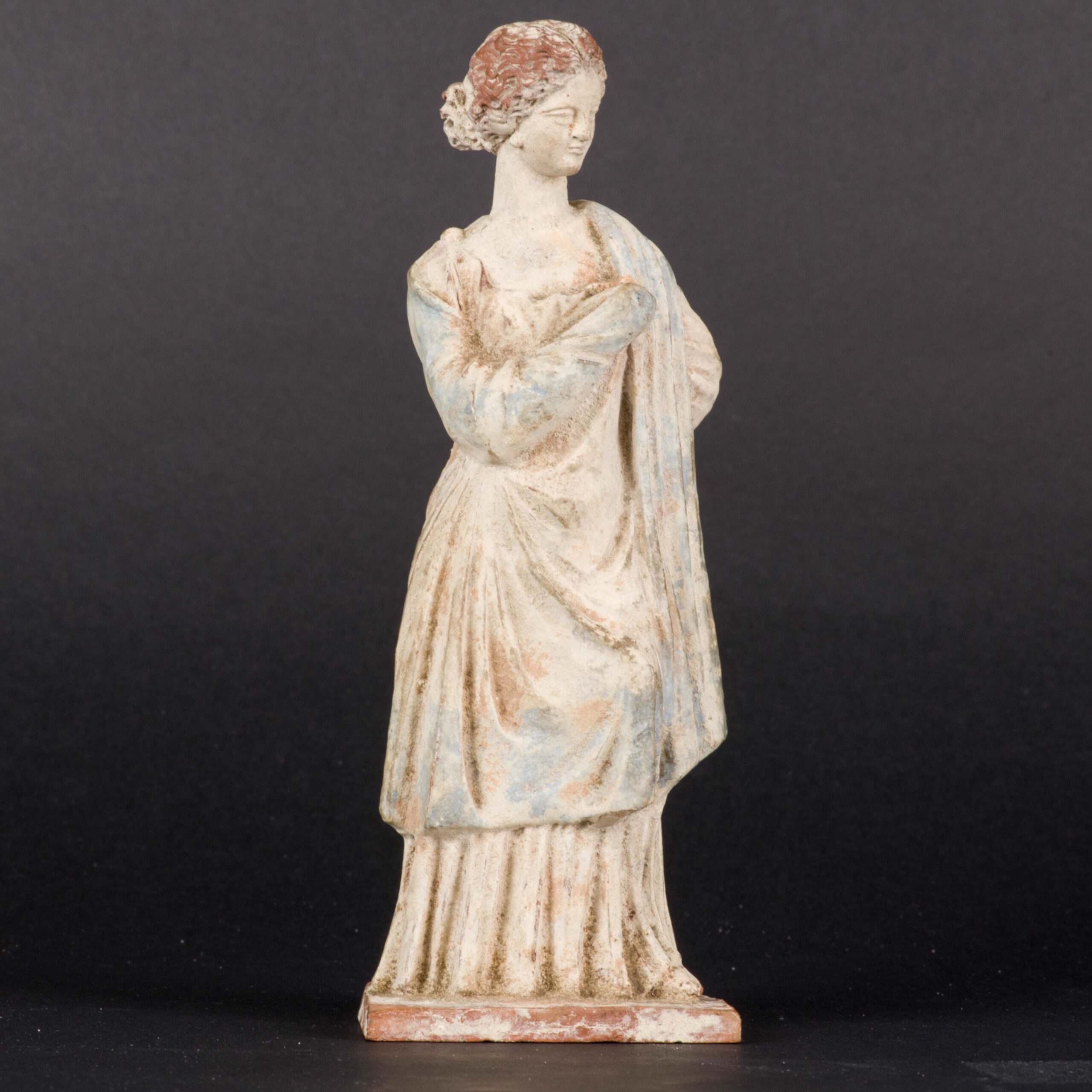
Ceramic figurine of a young woman. She wears a long, simple dress known as a chiton with a blue himation or cloak. Such figurines were common around Greece and the broader Mediterranean. They offer a rare glimpse in the daily life of women in the ancient...
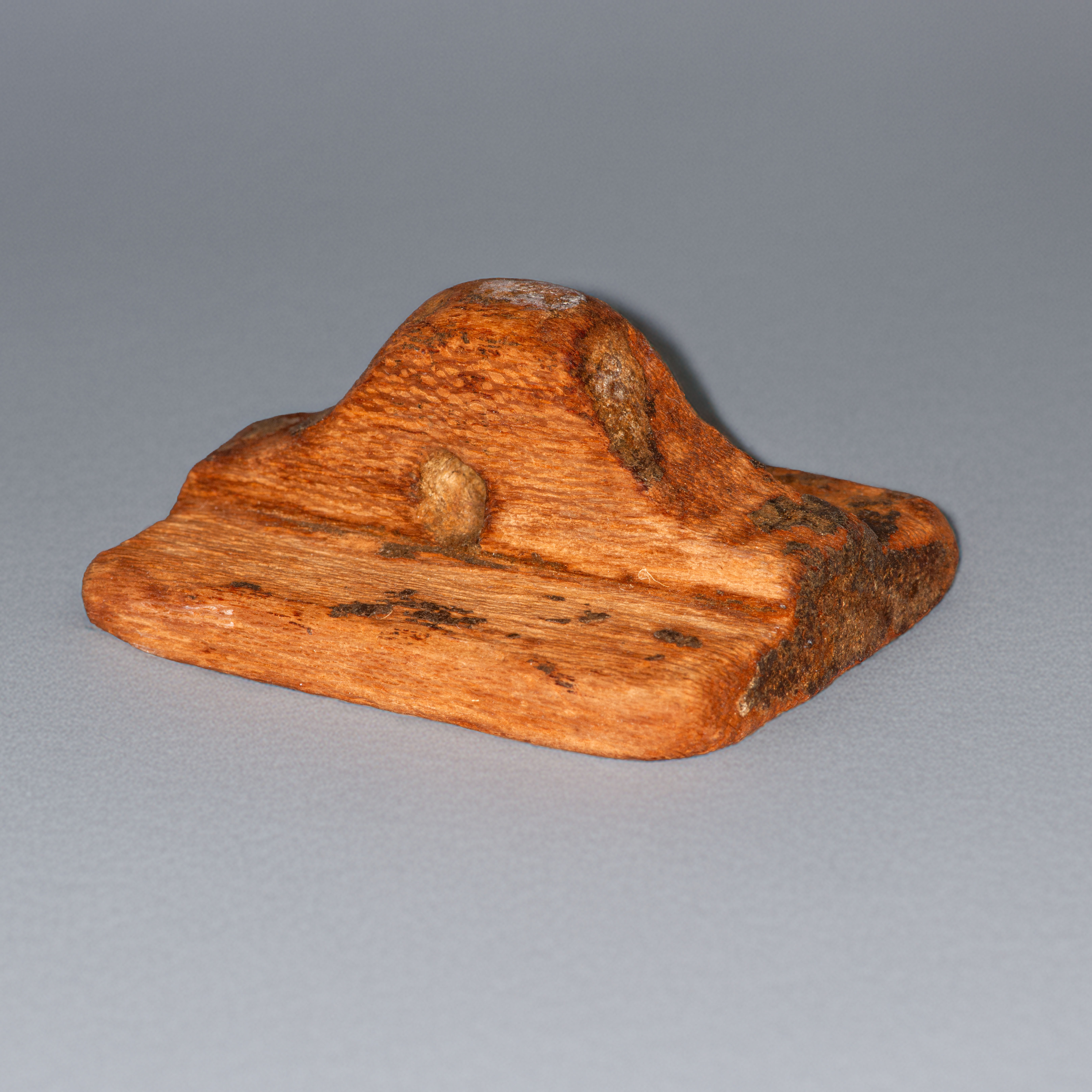
This wooden stamp comes from Karanis in Egypt, and dates to sometime between the 1st century BCE and the 4th century CE. In the ancient Mediterranean, bread formed a central part of peoples’ daily diet and, as in many places of the world still today, while dough was...
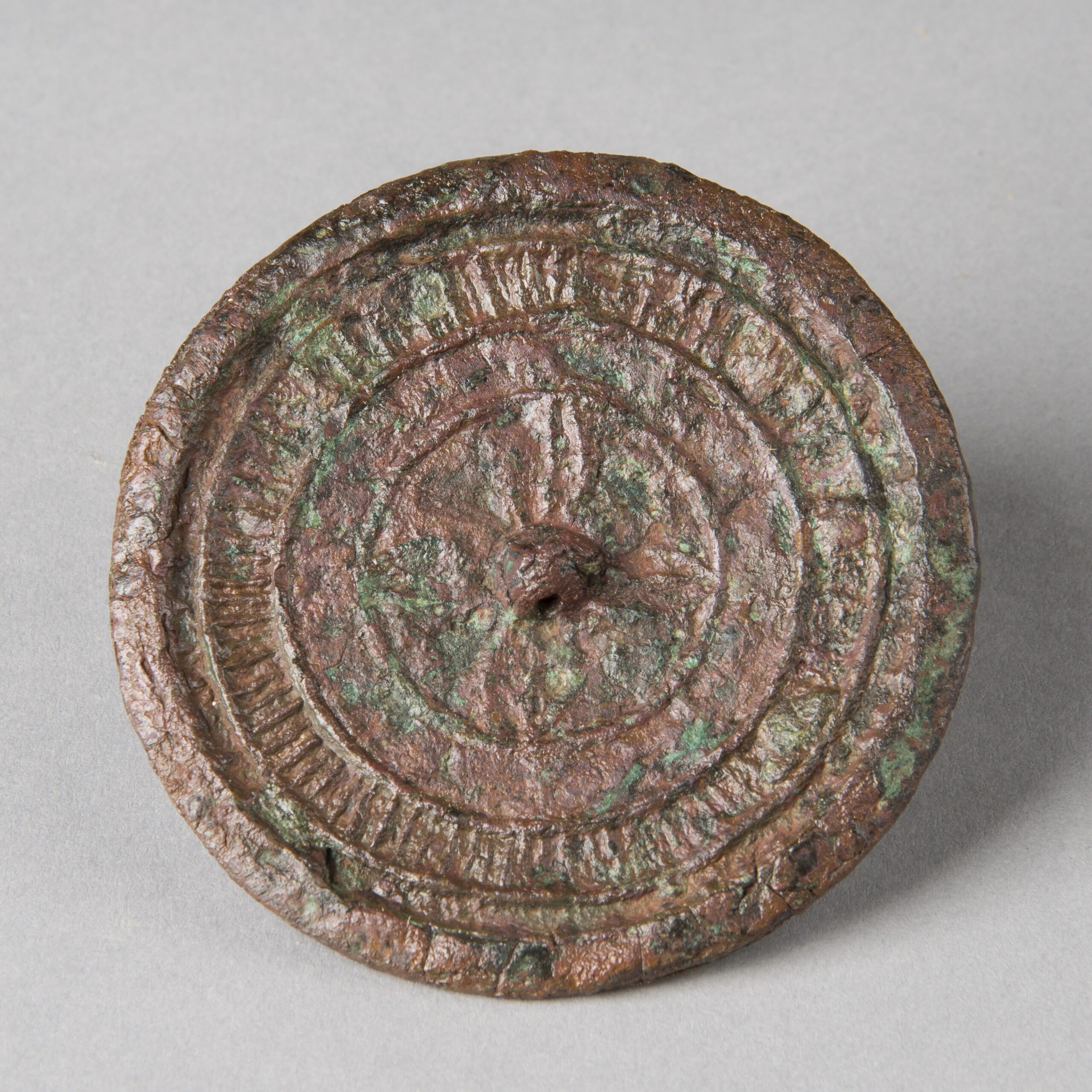
A copper-alloy mirror recovered from U-M excavations at Seleucia on the Tigris (Iraq). This was a locally produced imitation of a type of mirror typical of Han China (206 BCE to CE 220), some of which reached Mesopotamian and Mediterranean sites via the Silk Road. The...
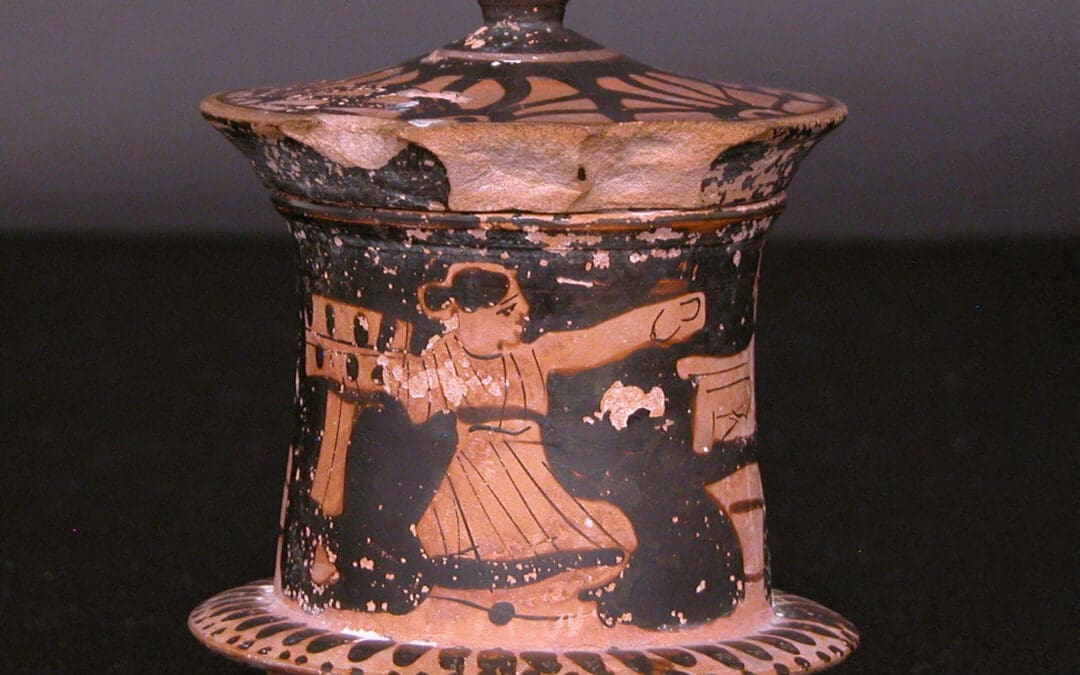
This ceramic object is a pyxis, a small cylindrical container with a fitted lid often used by ancient people to store small items such as jewelry or cosmetics. This example depicts two women and an eros (cupid); one woman looks at herself in a mirror while the eros...
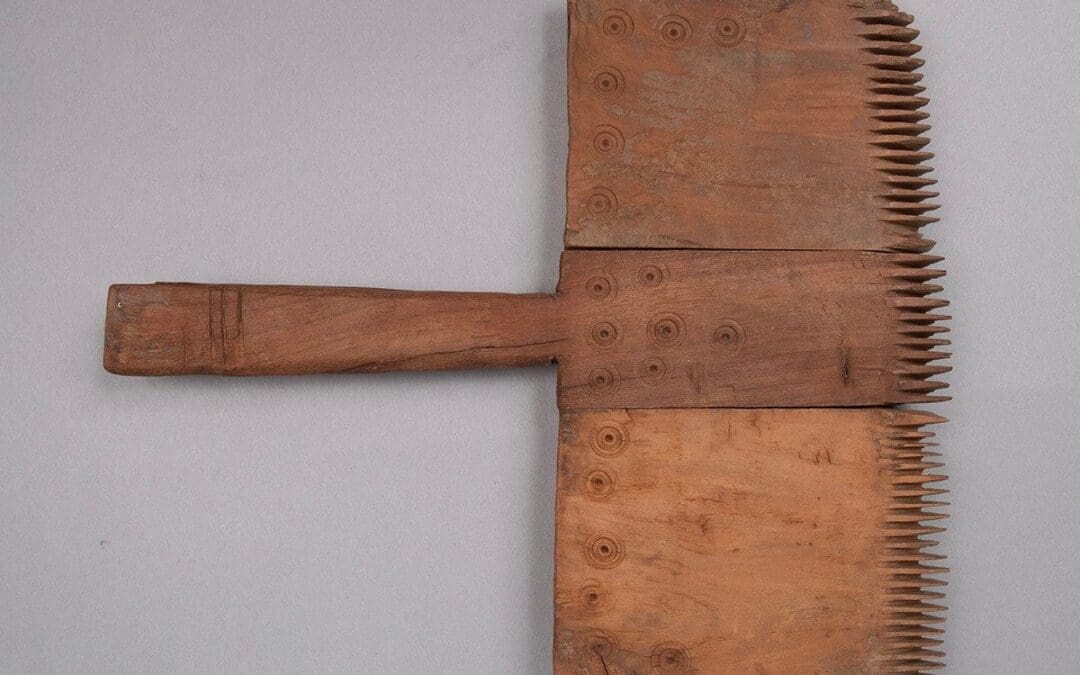
Weaving combs are used to beat or compress weft yarns against previous rows, ensuring that the final textile has a consistent density. This large weaving comb was made from three pieces of wood joined with pegs, decorated with a concentric circle design. It is one of...
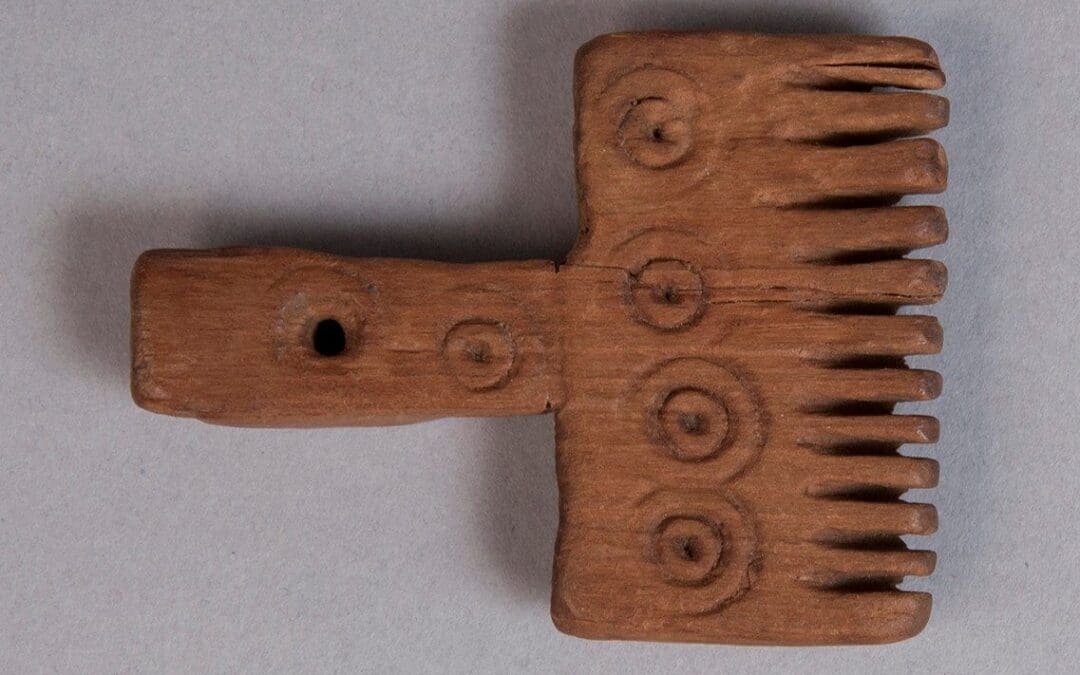
This is a miniature comb, excavated from Karanis, that was most likely used in children’s play activities. Today, many children play with miniatures of “adult” objects to learn behaviors and mimic social interactions; this comb may have served a...
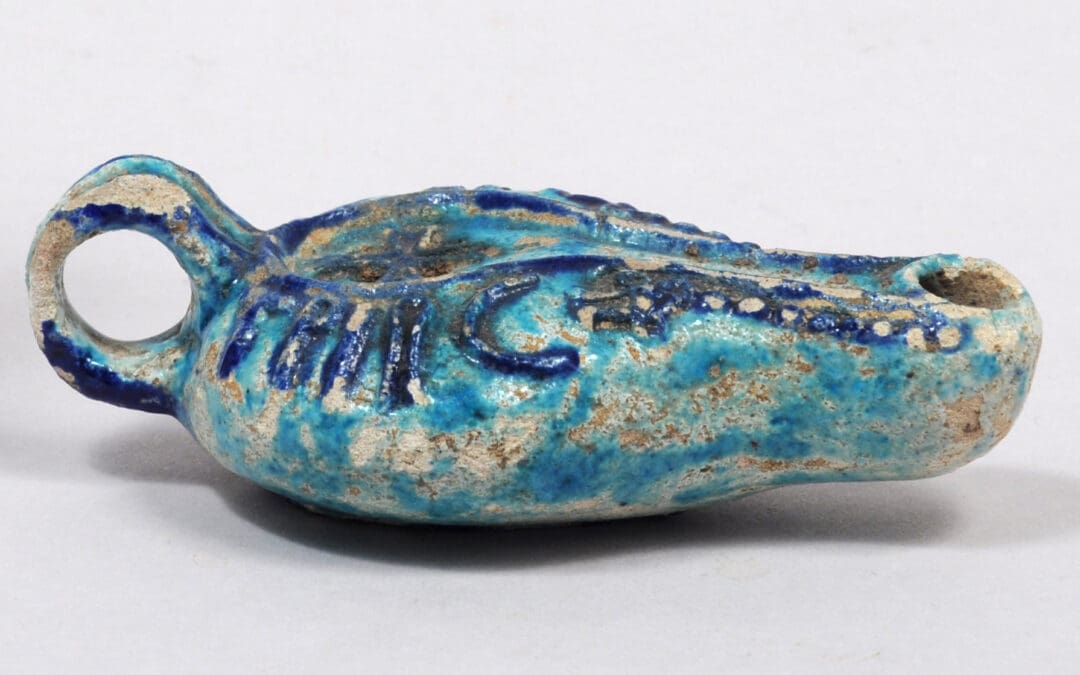
This lamp from Egypt’s Fayoum region is testament to both continuity and change in the ancient Mediterranean. The greenish blue to dark blue glaze belongs to a family of similar-colored materials, often called “faience,” used in Egypt since the...