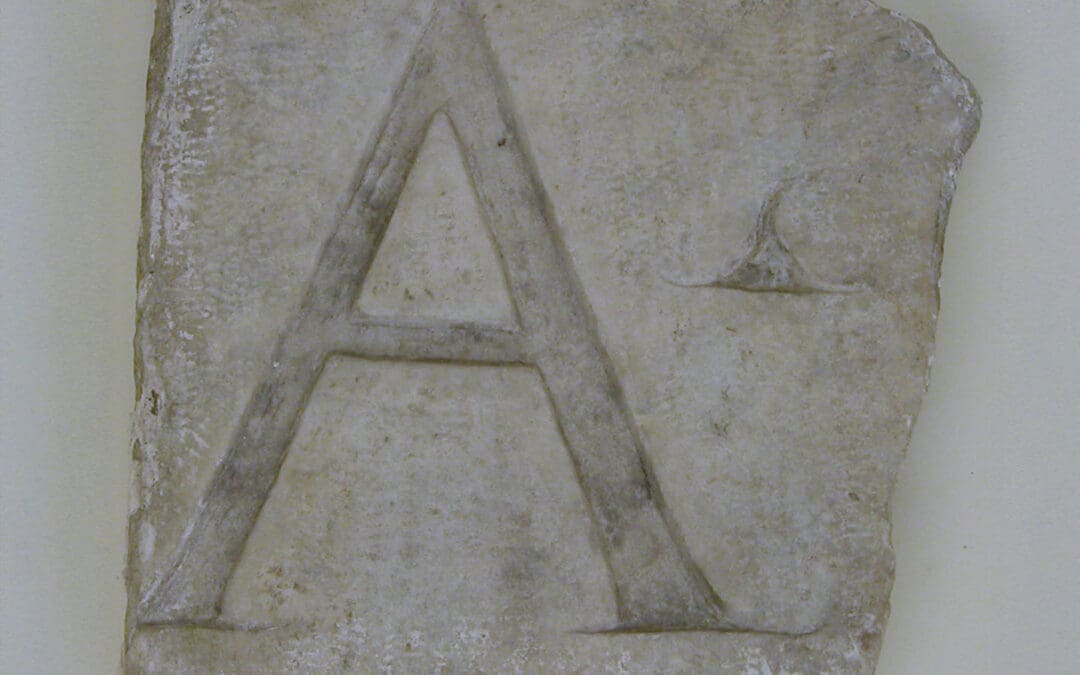
Portion of a monumental public inscription preserving only one letter and an interpunct (a dot separating letters and/or words in ancient inscriptions). The edge to the left of the “A.” is straight and the back shows possible traces of attachment,...
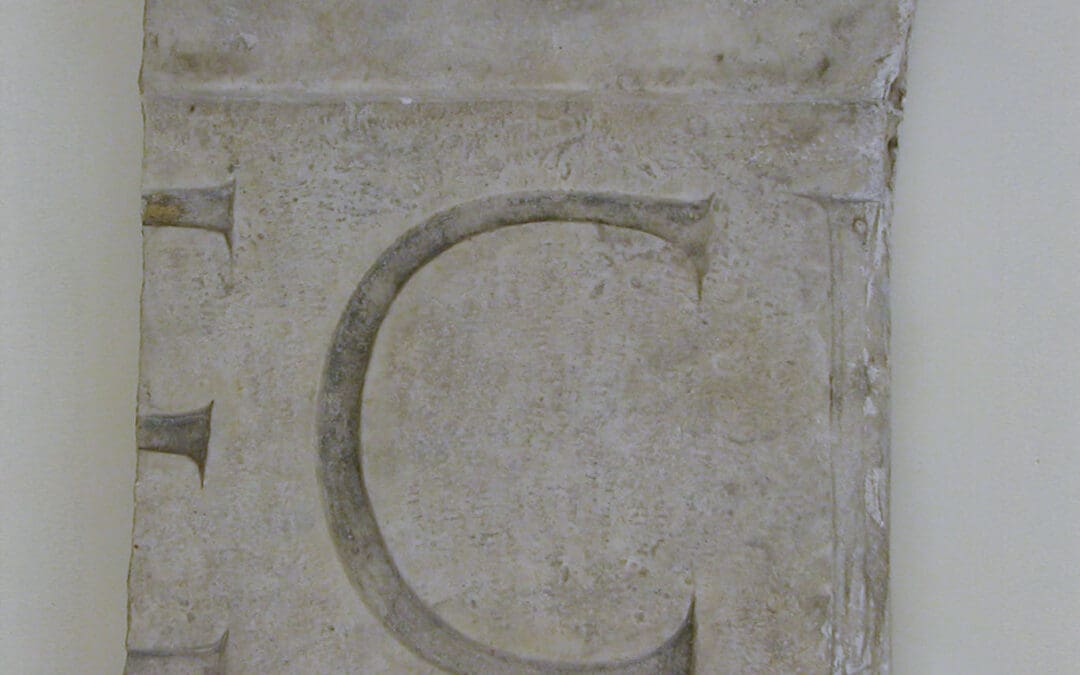
Portion of a larger monumental public inscription. This fragment preserves one complete letter and two partial letters from the middle of the honoree’s nomen (family/clan name). Chisel marks are visible on the surface of the stone, revealing how it was first...
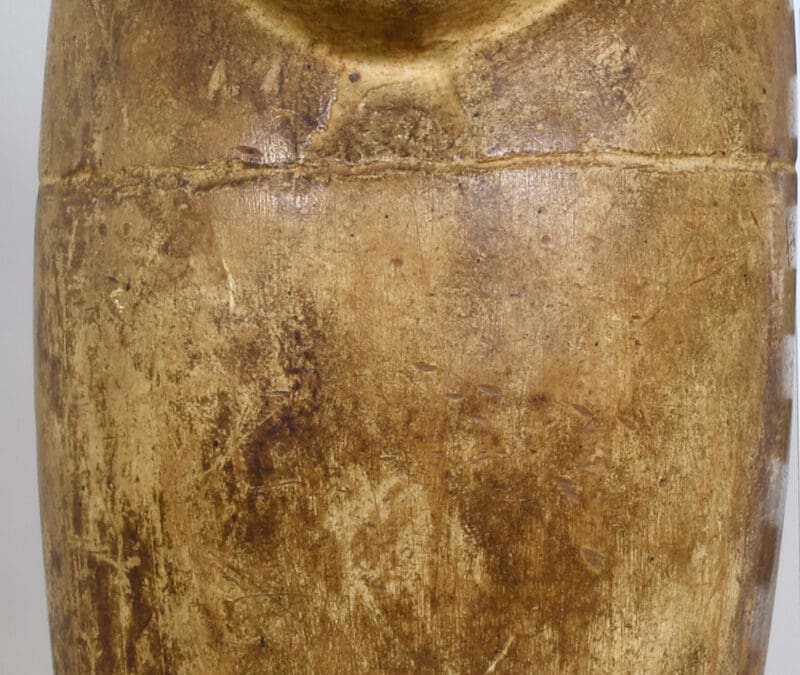
Canopic jars were originally used to hold the embalmed organs of mummified deceased. After Dynasty XXI, however, there was a shift in funerary practices towards replacing the organs into a special cavity within the mummy. Then, canopic jars became more symbolic and...
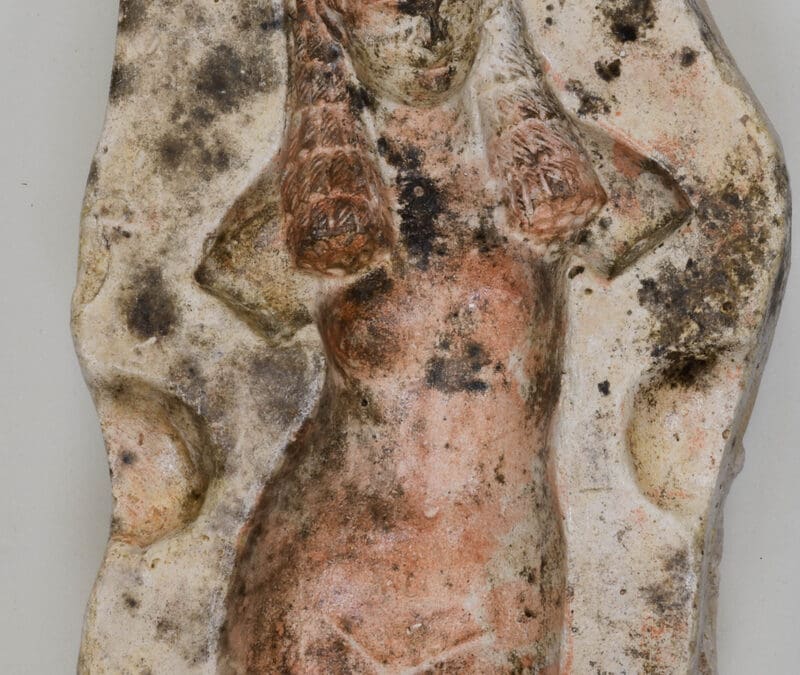
This 2nd–3rd century CE object is the top half of a plaster mold that was used to cast terracotta figurines of Isis or Aphrodite, or more likely a syncretistic union of these two iconic goddesses, which scholars have designated “Isis-Aphrodite.” There are three main...