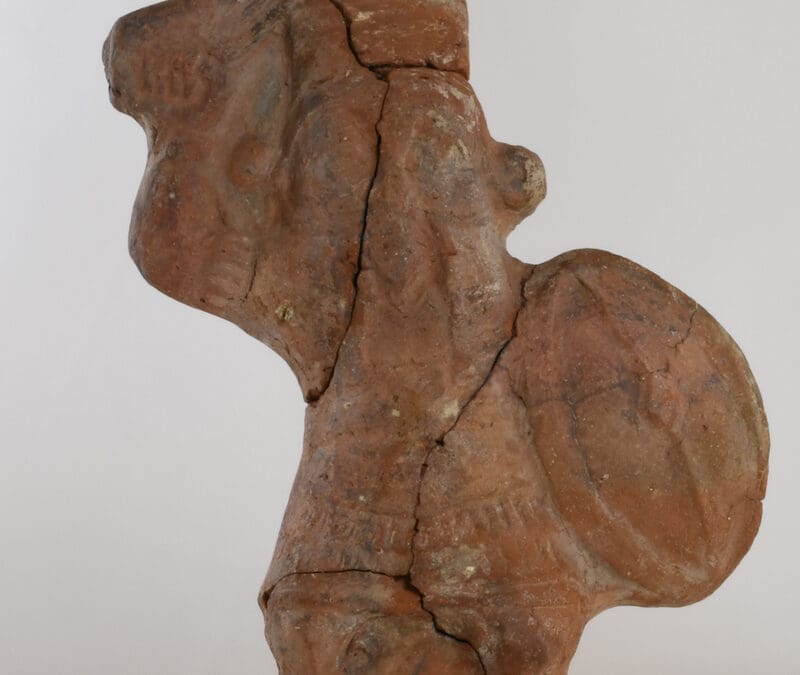
This ceramic figurine depicts Bes, the ancient Egyptian god known for his role as a defender and protector. In this representation, Bes assumes the form of a warrior with distinct leonine and human features. Bes, considered one of the “domestic deities,”...
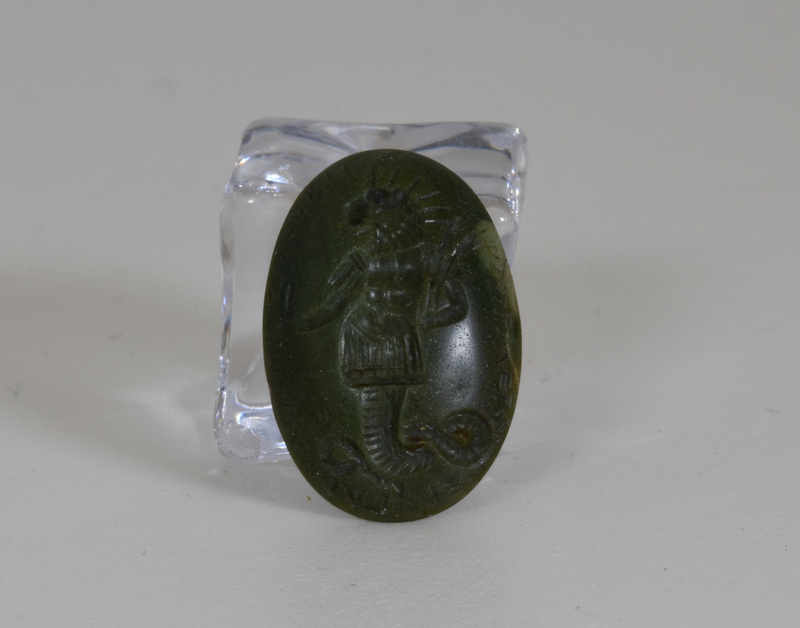
The Chnoubis amulet showcases a lion-headed serpent facing left. Its serpent form, intricately coiled, is adorned with seven or twelve rays encircling its head, sometimes arranged in pairs.The lion-headed snake design embodies the strength of a lion and solar...
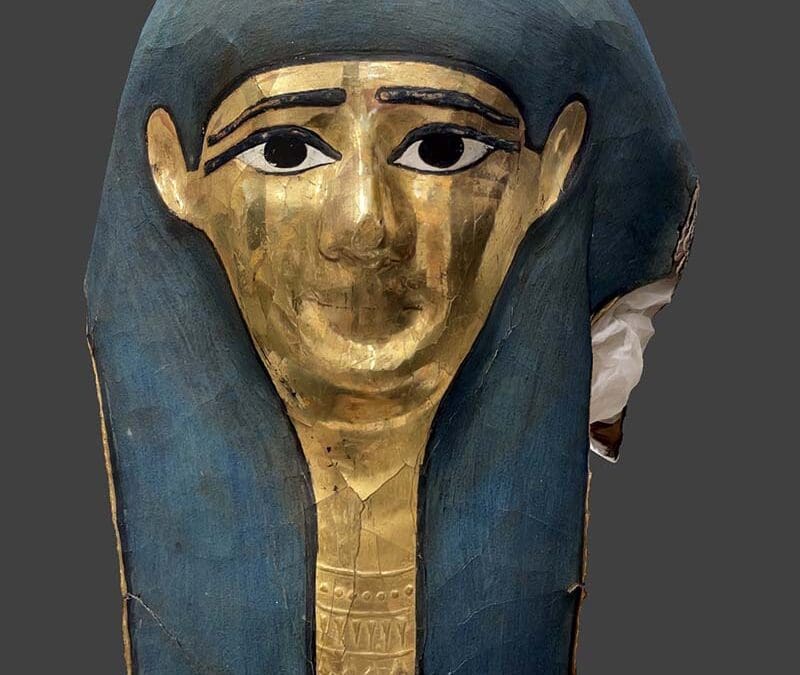
Unlike cartonnage masks of the Ramesside Period, which were often custom-made with extremely personalized details, masks from the Late-Ptolemaic periods, such as this one, represent more abstract facial features. As an example of a mass-produced mask, it does not...
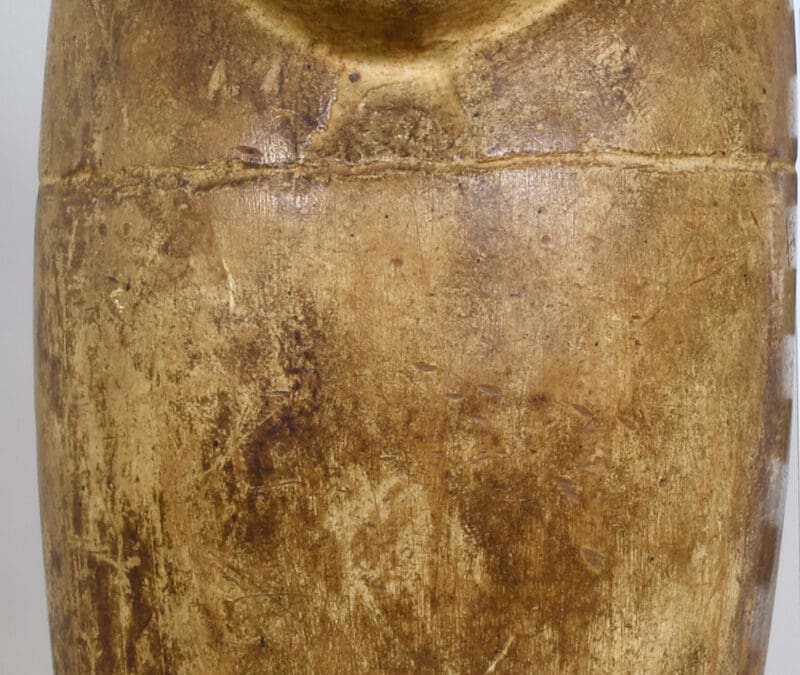
Canopic jars were originally used to hold the embalmed organs of mummified deceased. After Dynasty XXI, however, there was a shift in funerary practices towards replacing the organs into a special cavity within the mummy. Then, canopic jars became more symbolic and...
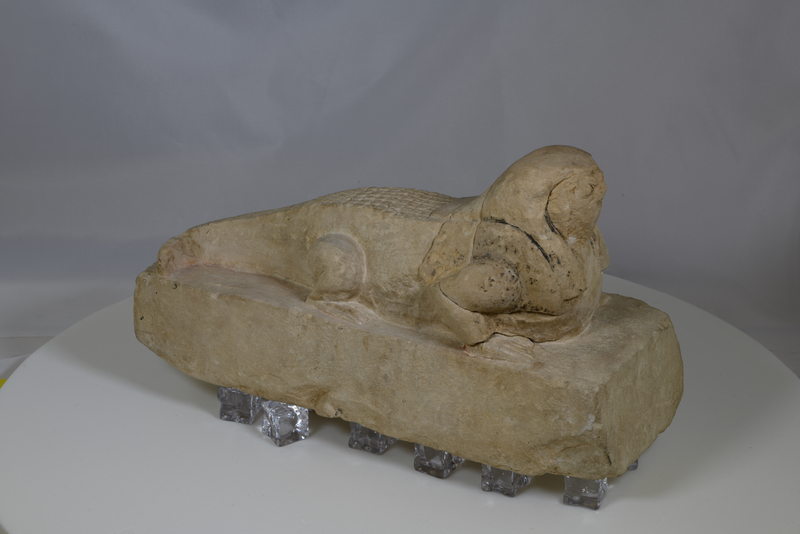
This limestone statue has the face of a falcon and body of a crocodile, representing the god Soknopaios. Soknopaios was an important creator deity for the Egyptians, whose name means “Sobek of Dimeh in the Fayum.” Crocodile deities were popular throughout...
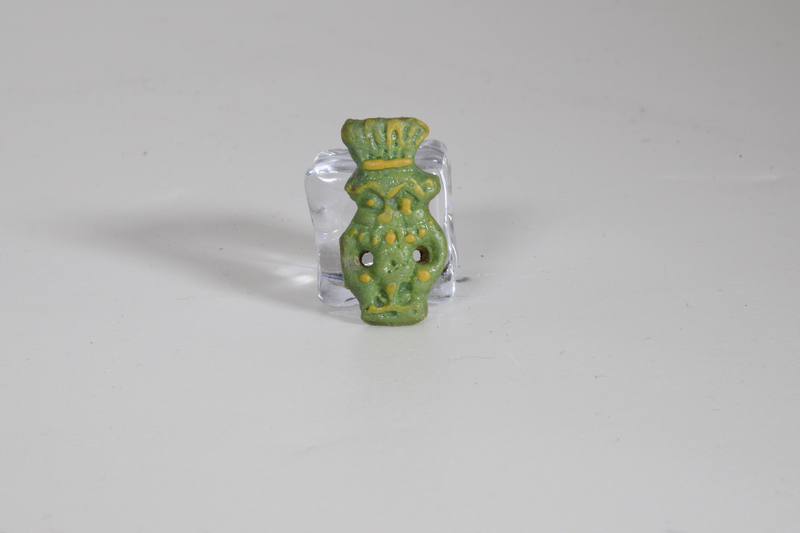
This faience amulet exhibits Bes in a vigilant pose. With a blend of human and leonine features, Bes wears a feathered headdress and squats with his hands resting on his knees, leaving his phallus exposed. A hole through the amulet’s head suggests its use as a...
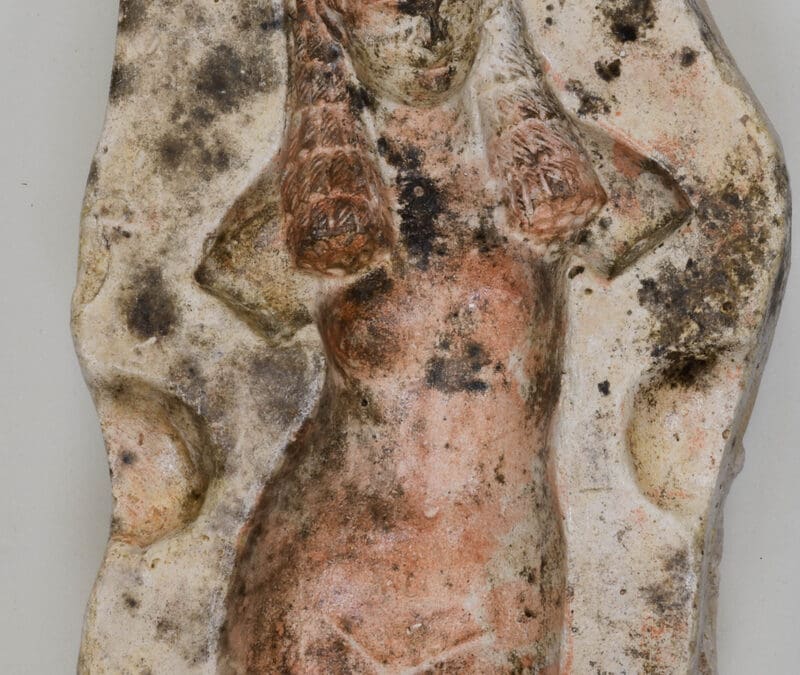
This 2nd–3rd century CE object is the top half of a plaster mold that was used to cast terracotta figurines of Isis or Aphrodite, or more likely a syncretistic union of these two iconic goddesses, which scholars have designated “Isis-Aphrodite.” There are three main...
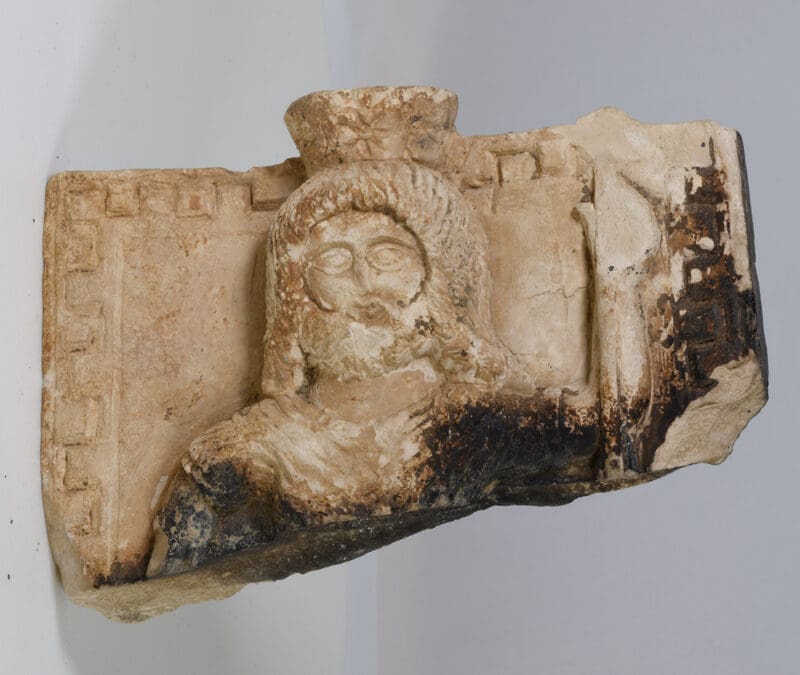
A relief fragment made of limestone that depicts the Egyptian god Serapis. The worship of Serapis was made popular by Ptolemy I Soter, and Serapis is often associated with the god Osiris-Apis. Serapis was further Hellenized to correspond to Zeus by Greek traders and...
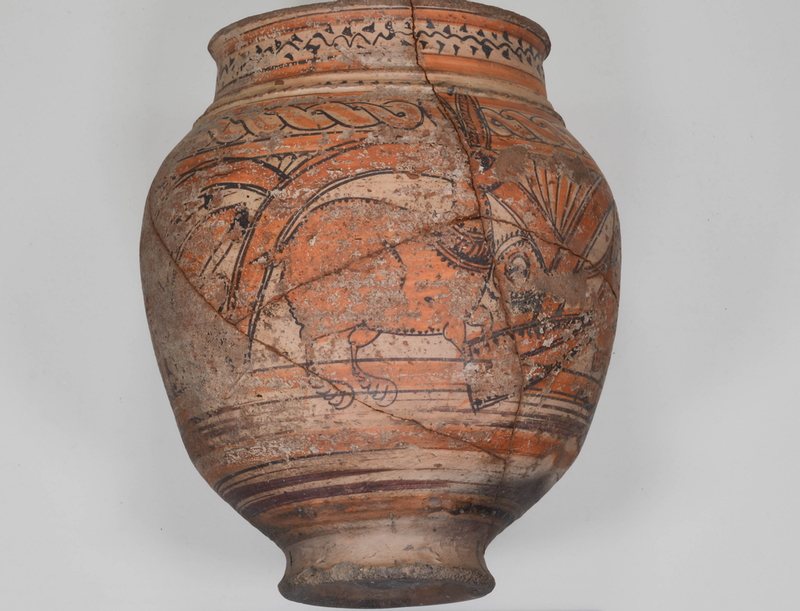
This painted jar, dating from the late Roman period to the beginning of the Byzantine period, offers a glimpse into the material culture of ancient Egypt. The most captivating feature of the jar is a wide band that spans the main body. It is divided into five...
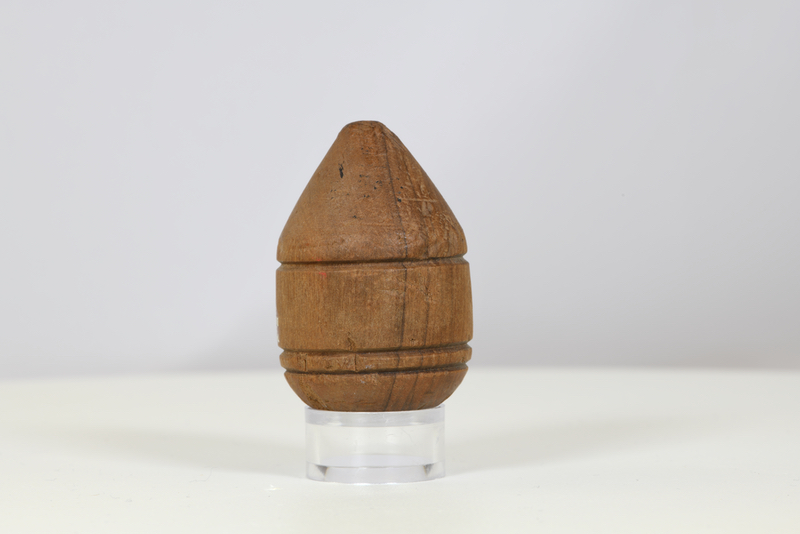
This small wooden top is an example of an “action toy” excavated from Karanis. Toys like this one, similar to designs today, developed children’s sensorimotor skills. The wooden top could have been used for either individualized play or in group...