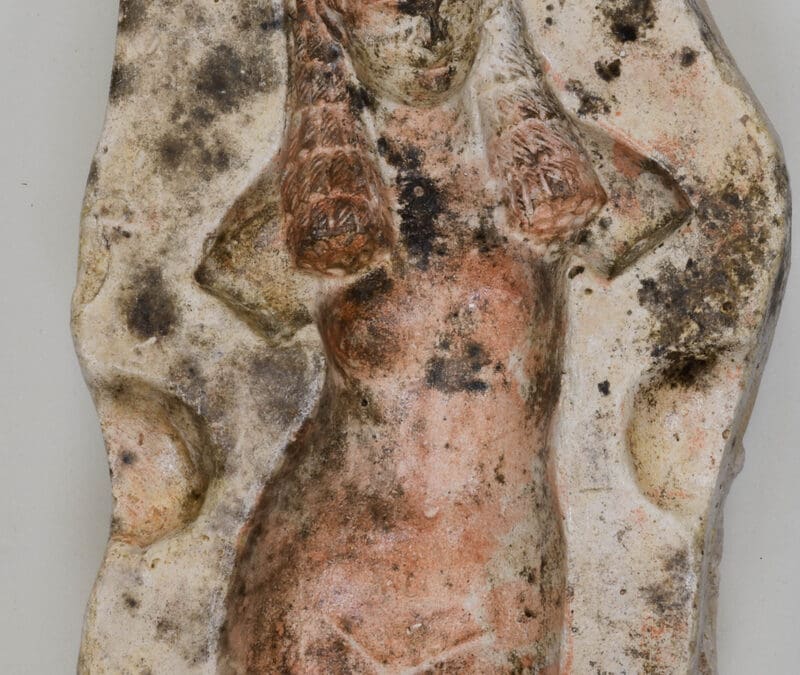
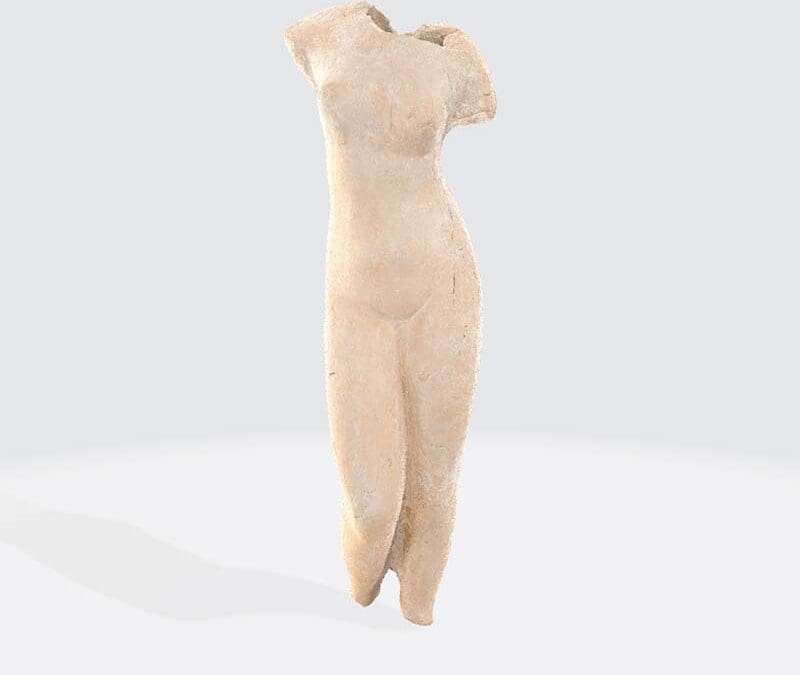
This 2nd–3rd century CE object is the top half of a plaster mold that was used to cast terracotta figurines of Isis or Aphrodite, or more likely a syncretistic union of these two iconic goddesses, which scholars have designated “Isis-Aphrodite.” There are three main...
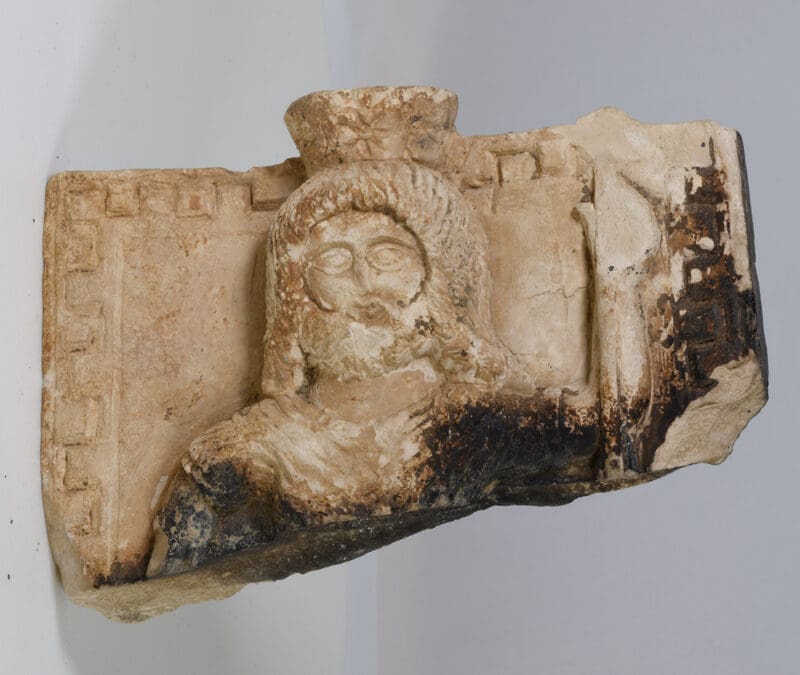
A relief fragment made of limestone that depicts the Egyptian god Serapis. The worship of Serapis was made popular by Ptolemy I Soter, and Serapis is often associated with the god Osiris-Apis. Serapis was further Hellenized to correspond to Zeus by Greek traders and...
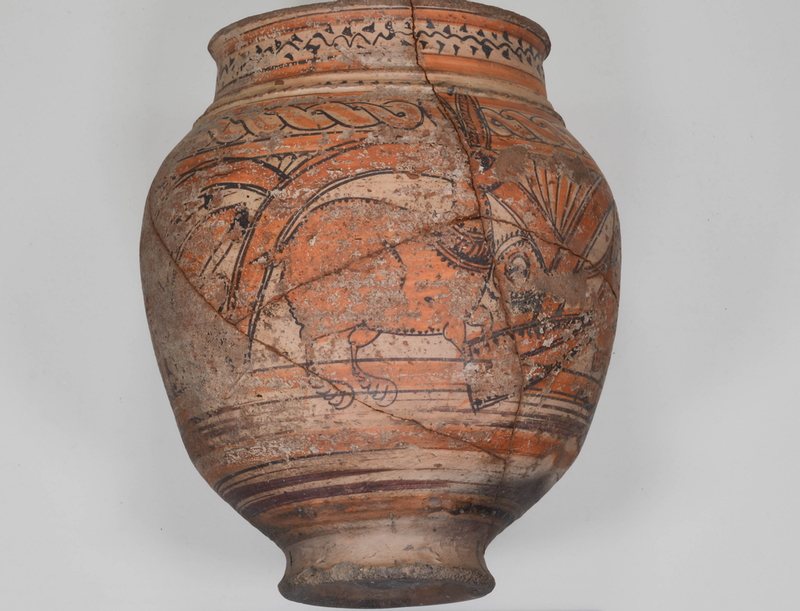
This painted jar, dating from the late Roman period to the beginning of the Byzantine period, offers a glimpse into the material culture of ancient Egypt. The most captivating feature of the jar is a wide band that spans the main body. It is divided into five...
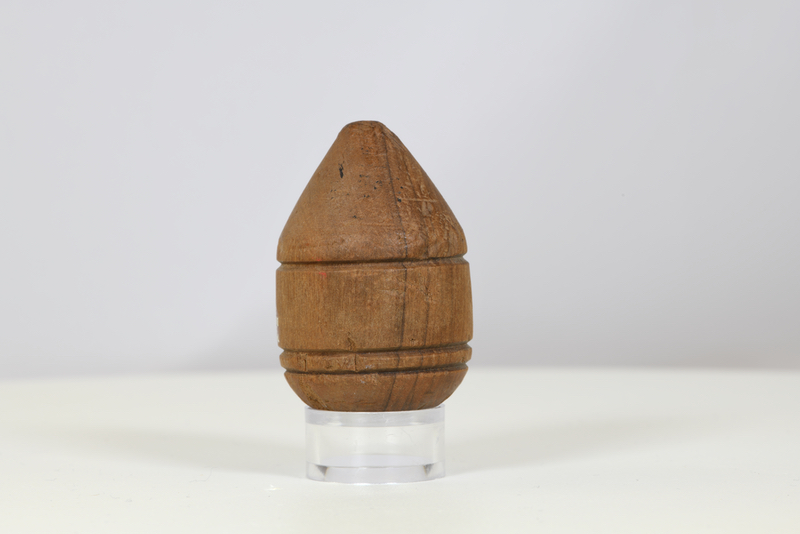
This small wooden top is an example of an “action toy” excavated from Karanis. Toys like this one, similar to designs today, developed children’s sensorimotor skills. The wooden top could have been used for either individualized play or in group...
This terracotta figurine represents Aphrodite, the goddess of love. During Egypt’s Graeco-Roman period, Aphrodite held a prominent place in both mythology and religious worship. Known for her association with beauty, femininity, and romance, Aphrodite was...
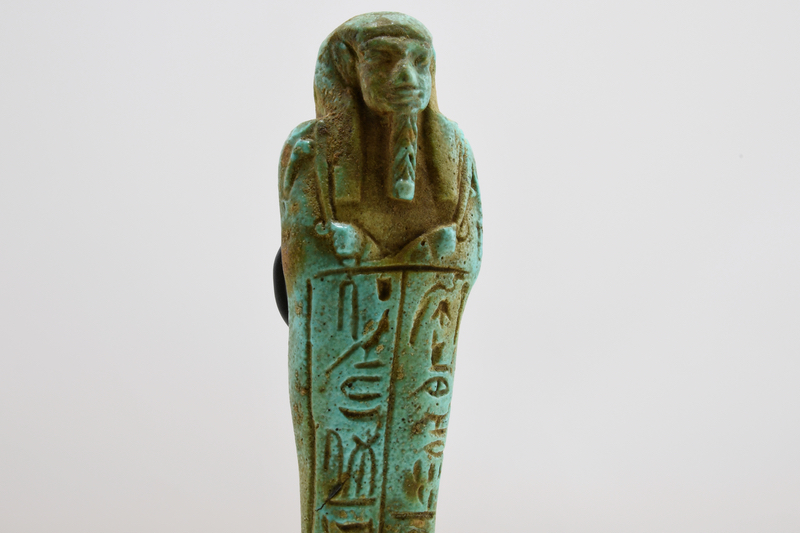
This mummy-like figurine, known as an ushabti, holds significant importance in ancient Egyptian funerary practices. Egyptians crafted these small ceramic objects, often using faience, to serve as surrogate servants for the deceased in the Afterlife. This particular...