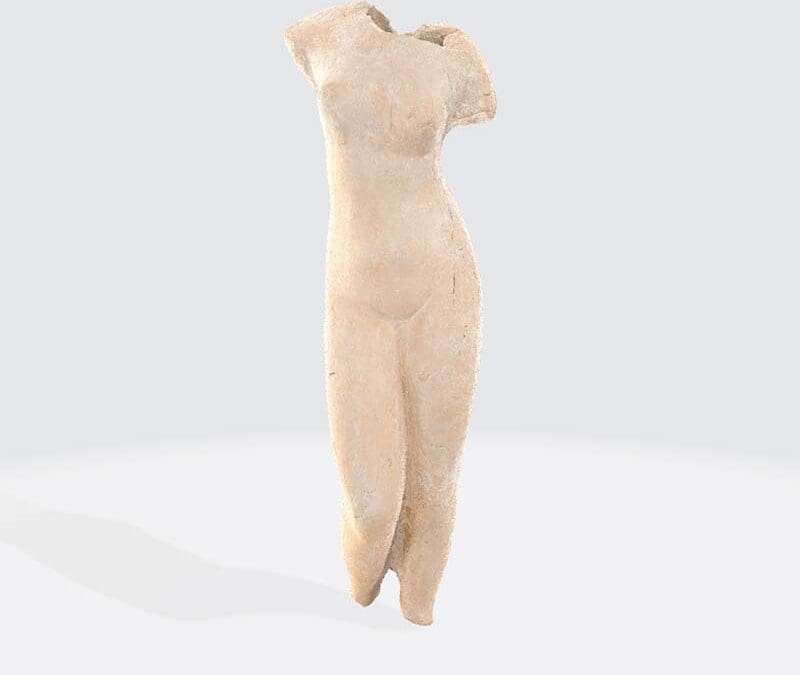
This terracotta figurine represents Aphrodite, the goddess of love. During Egypt’s Graeco-Roman period, Aphrodite held a prominent place in both mythology and religious worship. Known for her association with beauty, femininity, and romance, Aphrodite was...
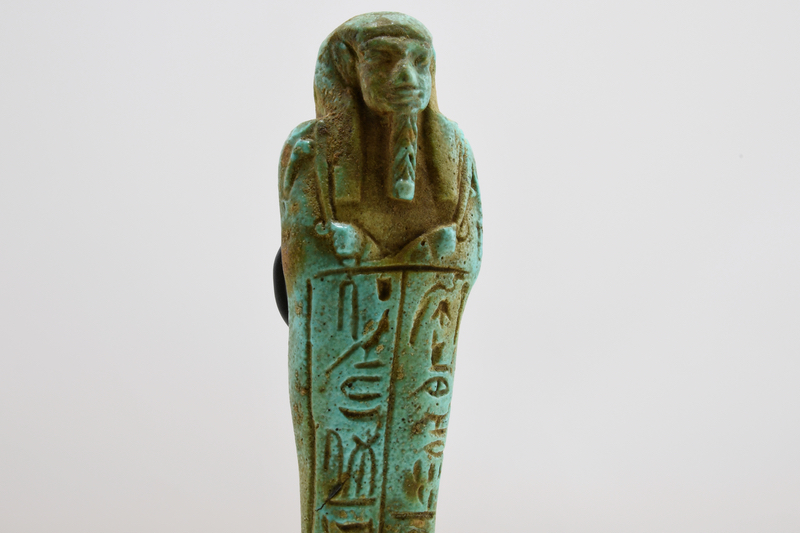
This mummy-like figurine, known as an ushabti, holds significant importance in ancient Egyptian funerary practices. Egyptians crafted these small ceramic objects, often using faience, to serve as surrogate servants for the deceased in the Afterlife. This particular...
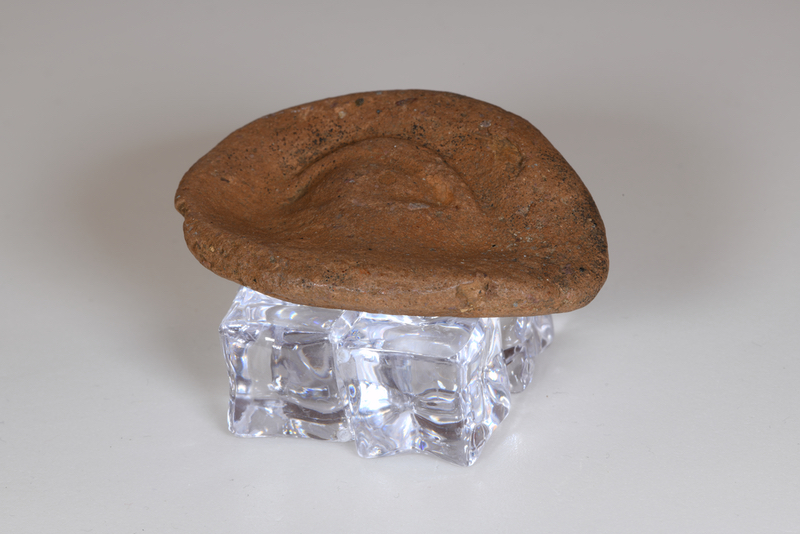
This clay eye is an example of an anatomical votive most likely dedicated to a healing deity. The dedicator of this clay eye may have been vision impaired and was seeking help from a healing god, such as Asclepius. Practically any body part that was in need of healing...
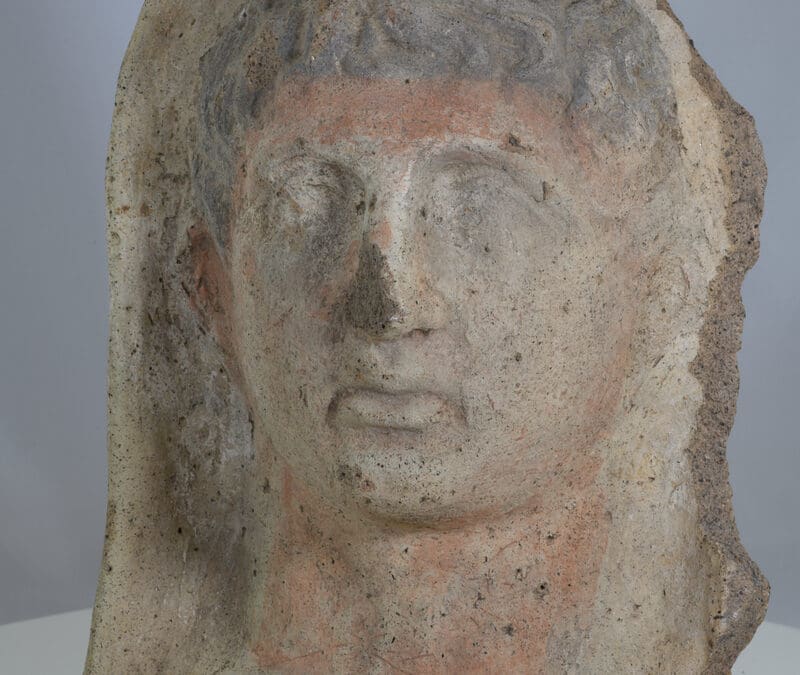
This is a Roman male votive figurine from the Republican period that has traces of black and red paint. There is also a small hole on the backside of the figurine that could have been used for hanging the portrait.