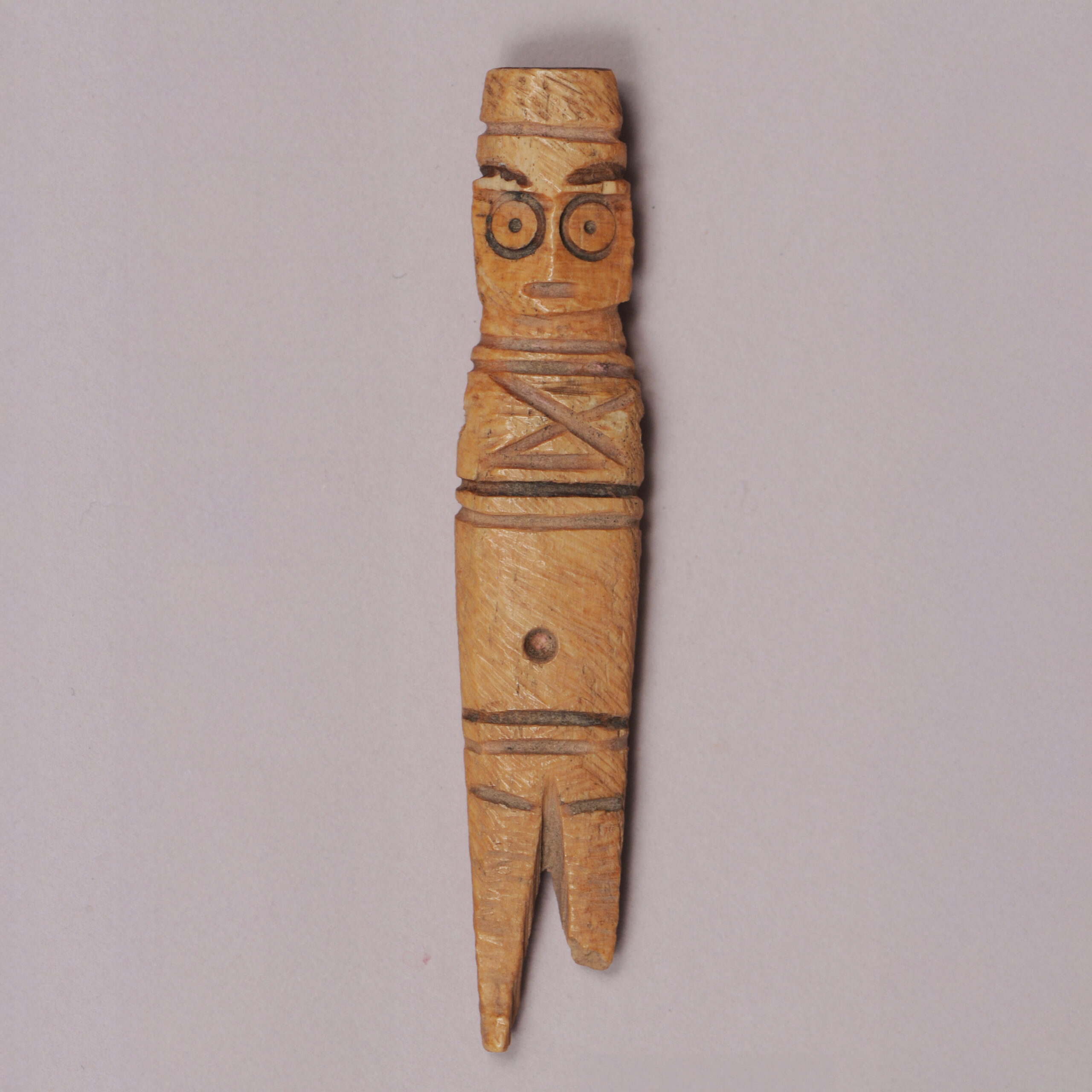
This bone figurine is one of dozens of similar examples excavated by the Kelsey at the site of Seleucia on the Tigris (Iraq) in the 1920s and 30s. The meaning and function of such figurines is not clear, with some scholars suggesting that they were children’s dolls,...
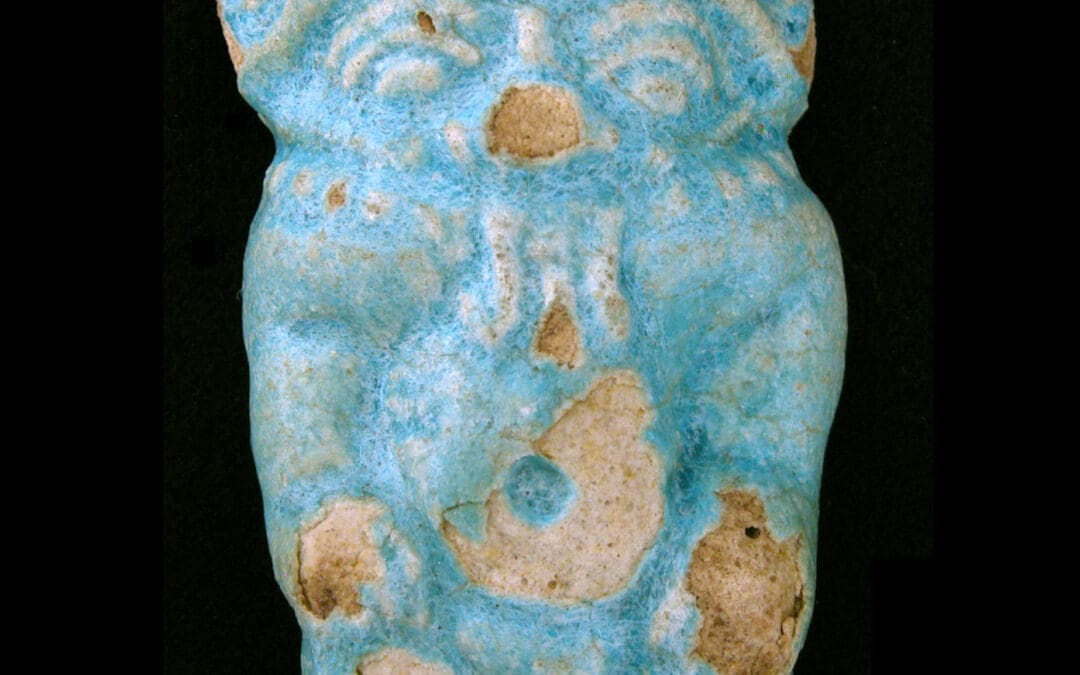
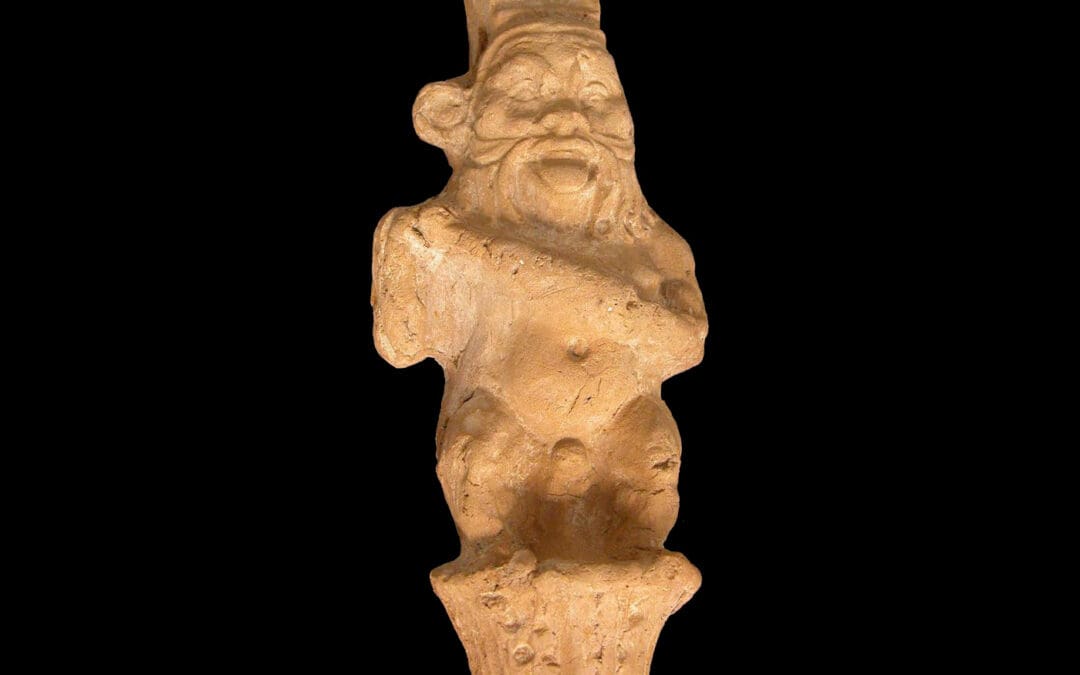
Bes is an Egyptian deity who protects young children and mothers. He is commonly depicted as a squat man with a roaring lion’s head or similar exaggerated facial features. Large eyes and a snarling mouth to scare away anything that might harm a child. This figurine is...
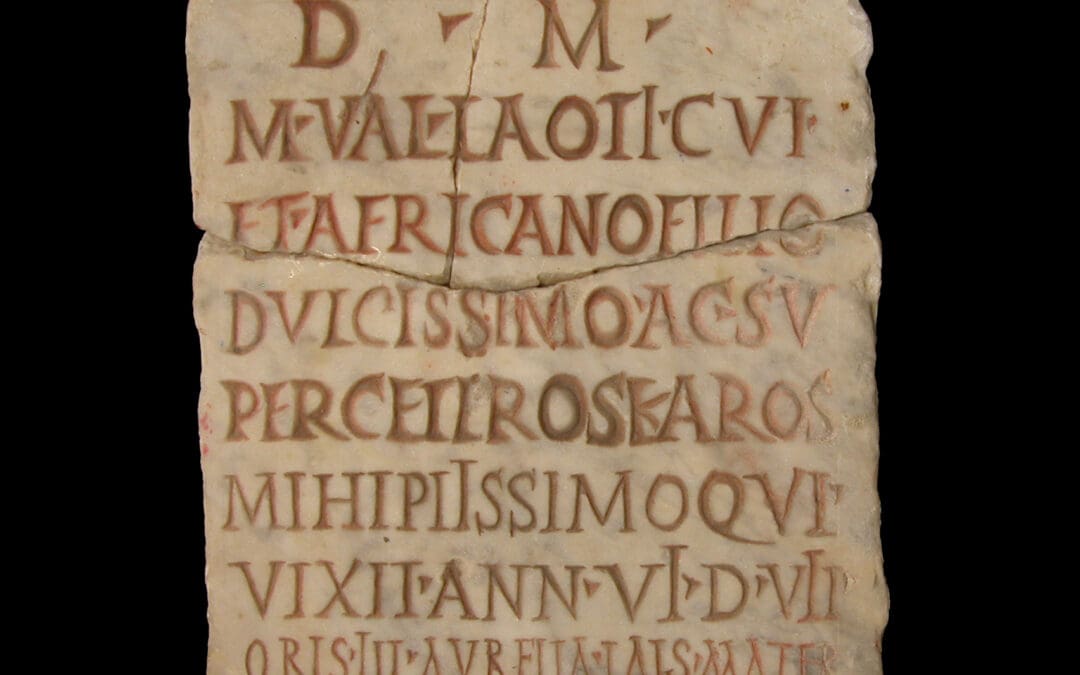
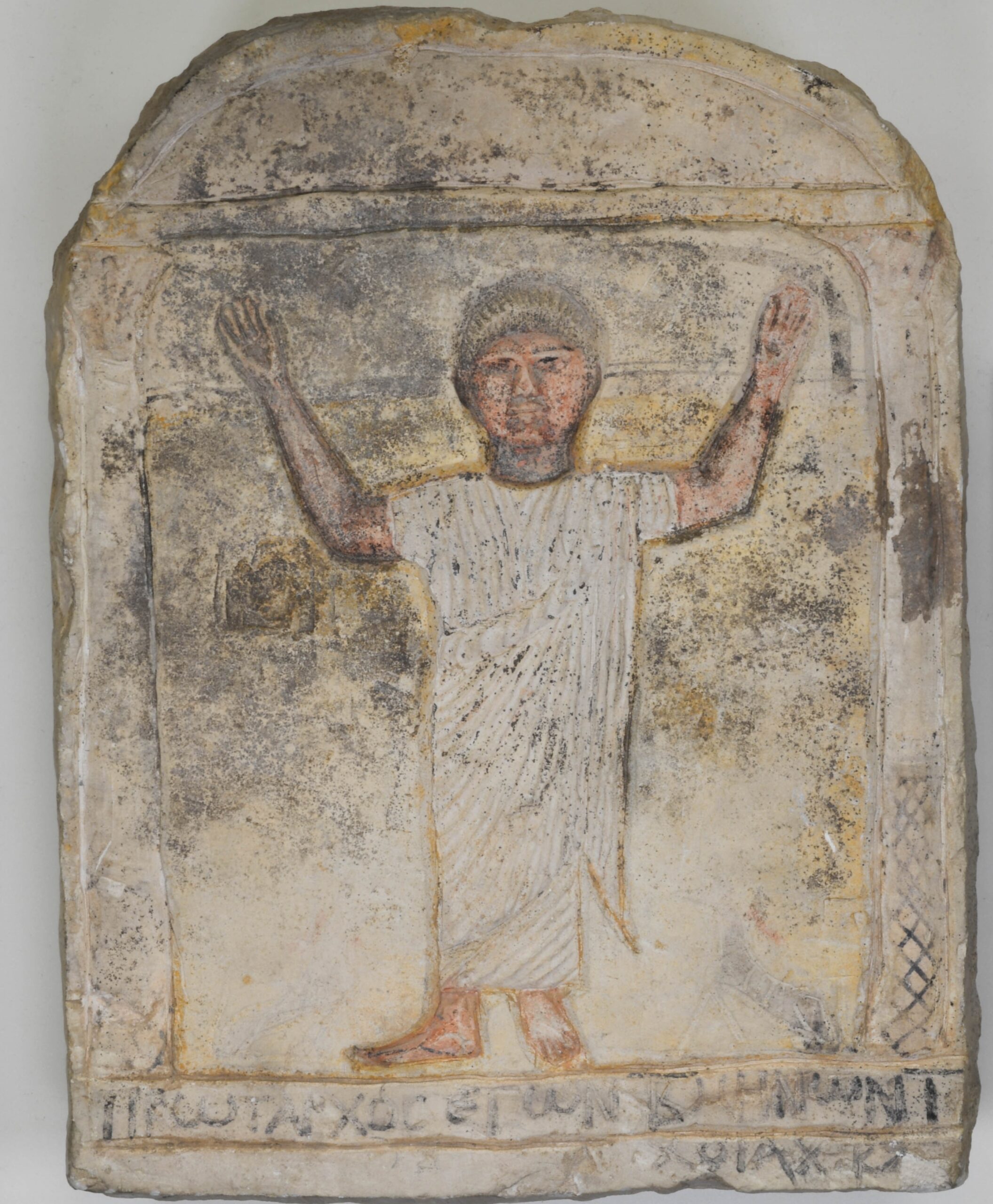
Funerary inscription for Marcus Valerius Laos, who went by the nickname ‘Africanus’. Marcus grew up in Puteoli, a port town in Italy, but his nickname suggests that his family moved there around the time of his birth from the Roman province of Africa....
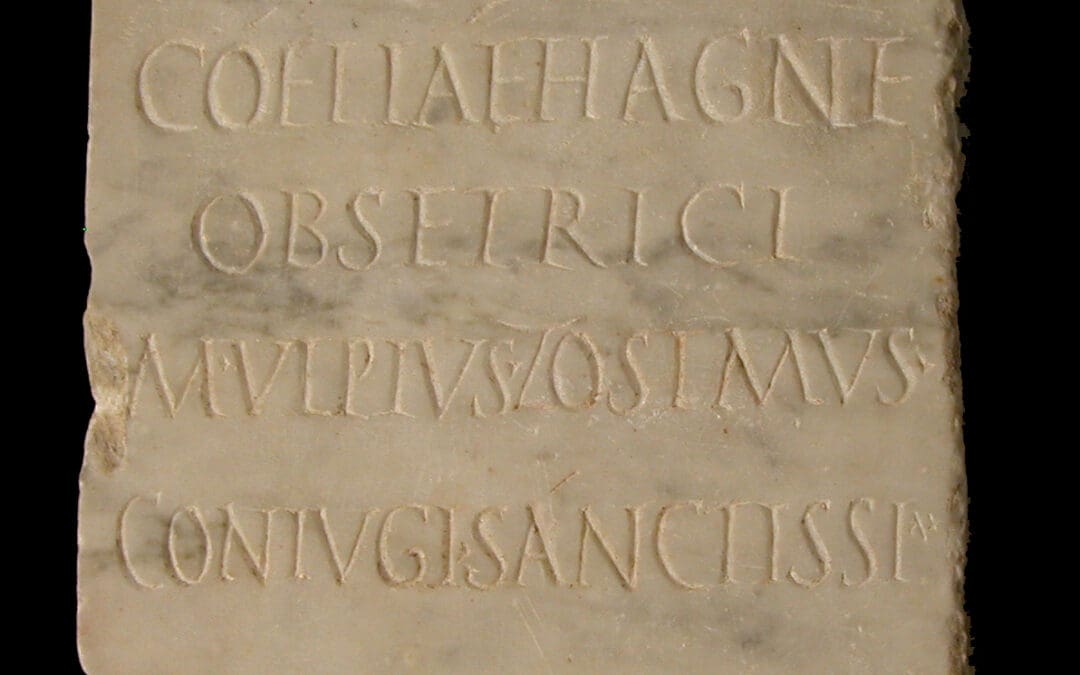
Funerary inscription of Coelia Hagne, a midwife (“obstetrix”) who lived in the area of Puteoli, on Italy’s Bay of Naples, in the 2nd century CE. This monument was dedicated to her by her husband, Marcus. Midwives like Coelia played a vital role in...
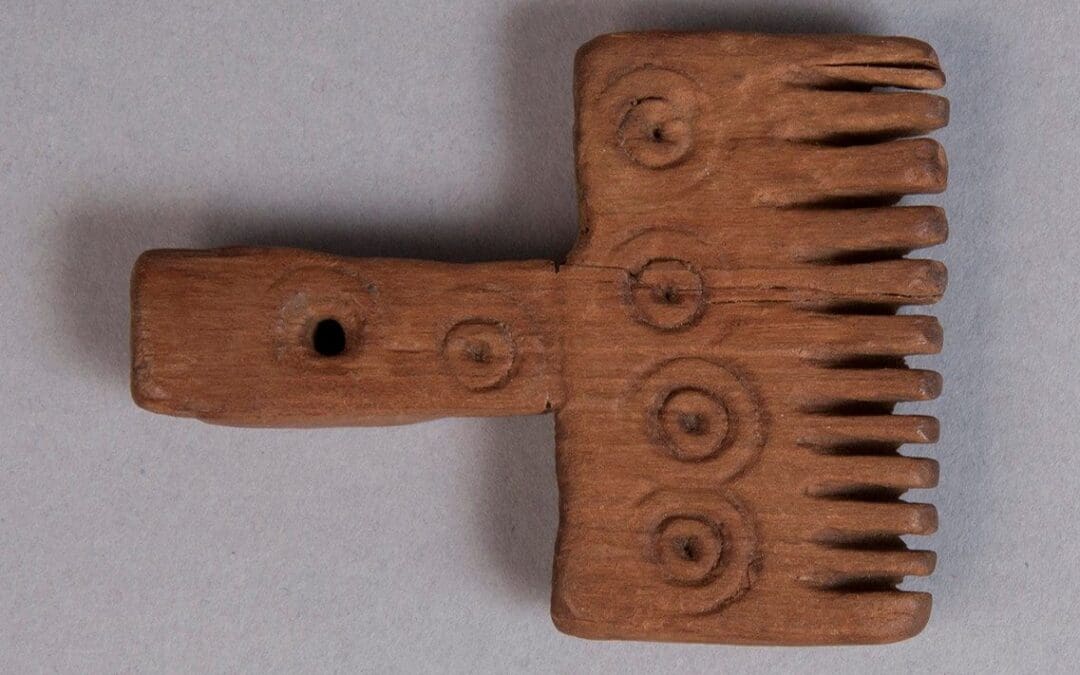
This is a miniature comb, excavated from Karanis, that was most likely used in children’s play activities. Today, many children play with miniatures of “adult” objects to learn behaviors and mimic social interactions; this comb may have served a...
The Egyptian god Bes was a protector of households and families, particularly women and children, as well as a patron of music and merriment. This figurine shows Bes standing atop a palm capital or tall lotus flower, wearing a triple-plumed headdress. He is shown...
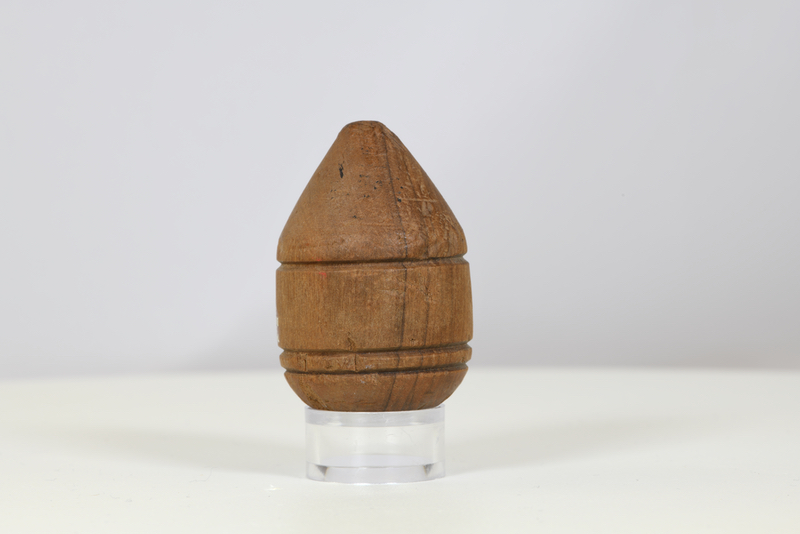
This small wooden top is an example of an “action toy” excavated from Karanis. Toys like this one, similar to designs today, developed children’s sensorimotor skills. The wooden top could have been used for either individualized play or in group...