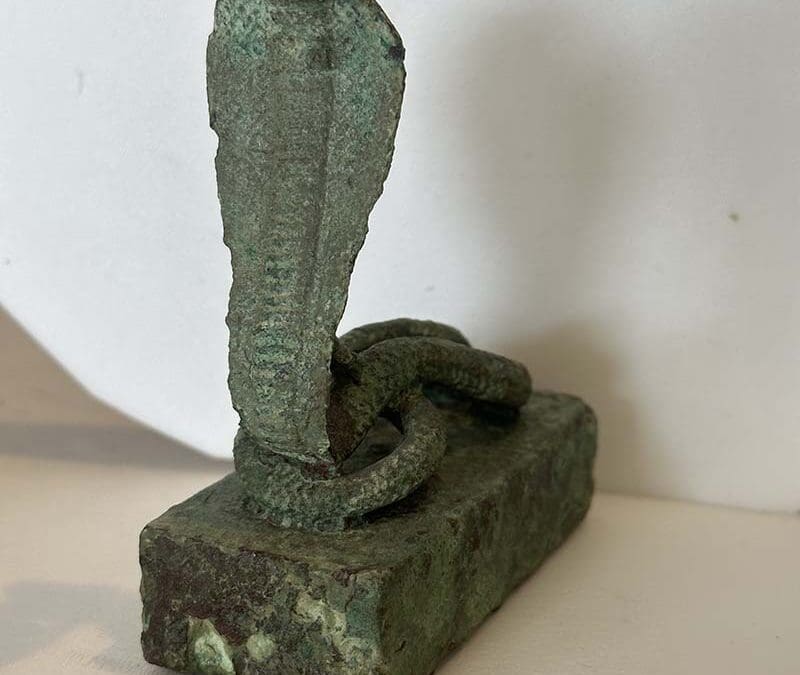
The rearing cobra, also known as the uraeus, was a central symbol of kingship and rule in Ptolemaic Egypt. Cobra figures were dedicated as votives to the goddess Wadjet; they were also incorporated into architecture and furniture as well as royal headpieces. This...
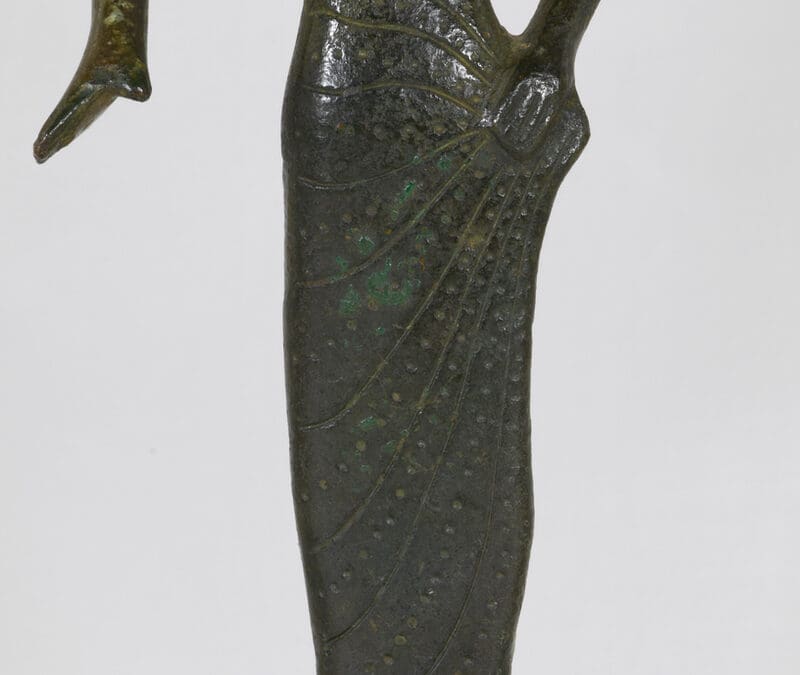
The Etruscan votive statuette of a woman illustrates the Etruscan taste for the archaic style, which lingered in some parts of Etruria (mainly in the north and northeast) long after it had gone out of fashion in central and southern areas.The large head and face,...
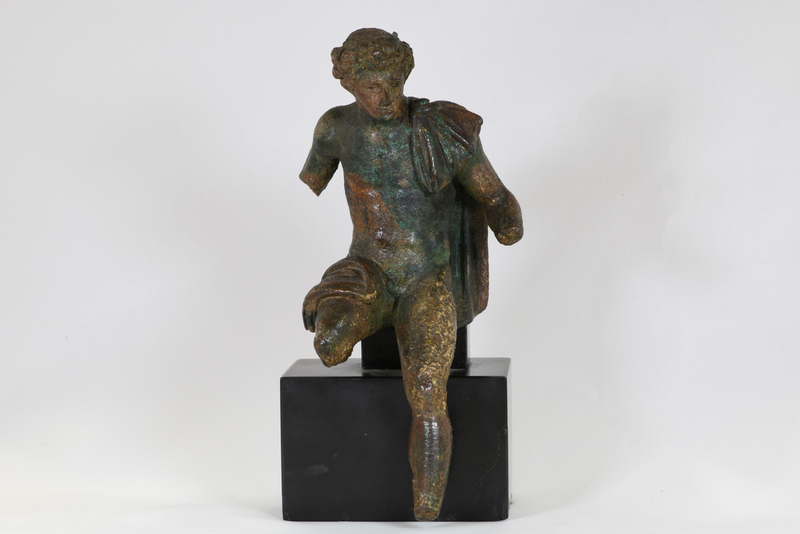
Roman bronze statuette of a seated Hermes/Mercury portrays the god in heroic nudity save for a riding cloak on his left shoulder and back. His torso and head turn slightly to the left. The naturalistic style of the figure represents the artistic tradition that...
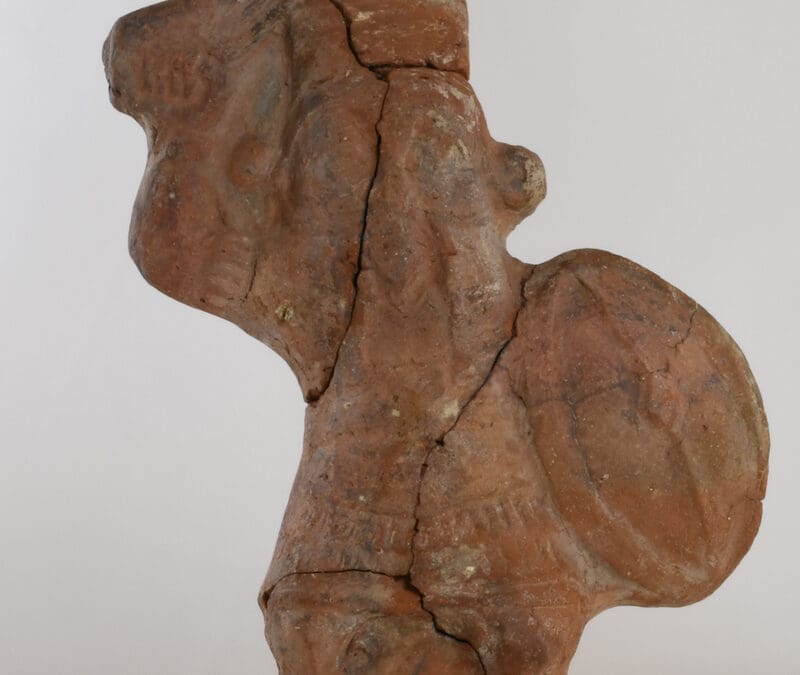
This ceramic figurine depicts Bes, the ancient Egyptian god known for his role as a defender and protector. In this representation, Bes assumes the form of a warrior with distinct leonine and human features. Bes, considered one of the “domestic deities,”...
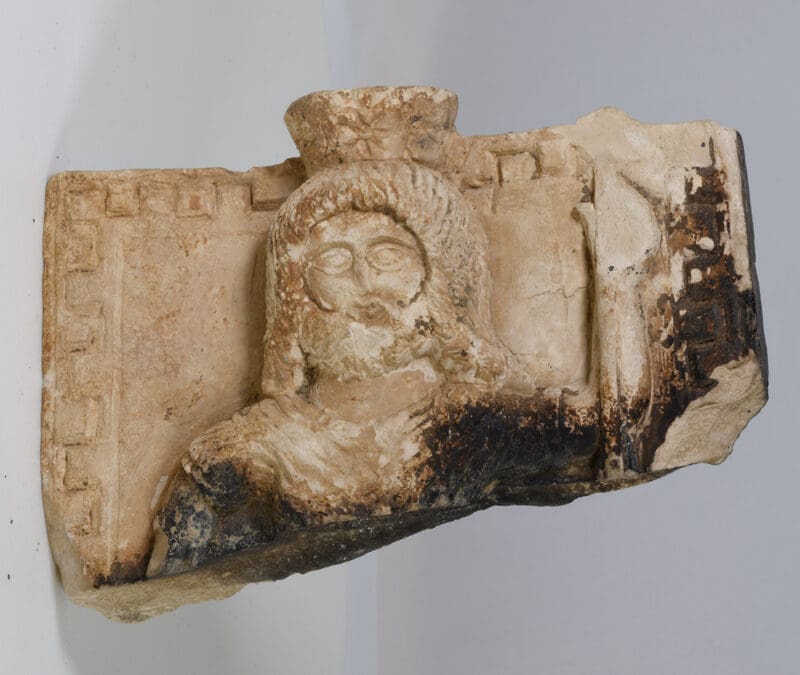
A relief fragment made of limestone that depicts the Egyptian god Serapis. The worship of Serapis was made popular by Ptolemy I Soter, and Serapis is often associated with the god Osiris-Apis. Serapis was further Hellenized to correspond to Zeus by Greek traders and...
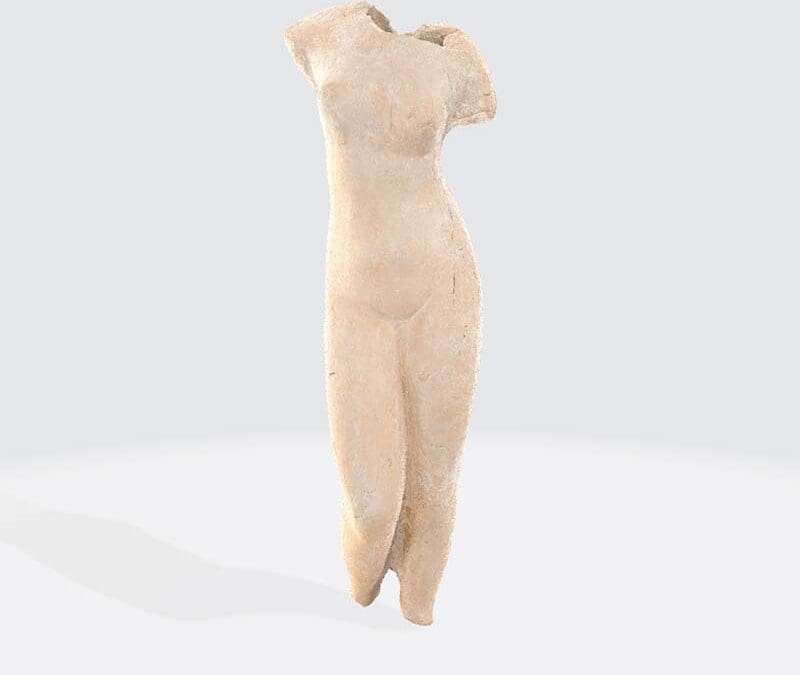
This terracotta figurine represents Aphrodite, the goddess of love. During Egypt’s Graeco-Roman period, Aphrodite held a prominent place in both mythology and religious worship. Known for her association with beauty, femininity, and romance, Aphrodite was...
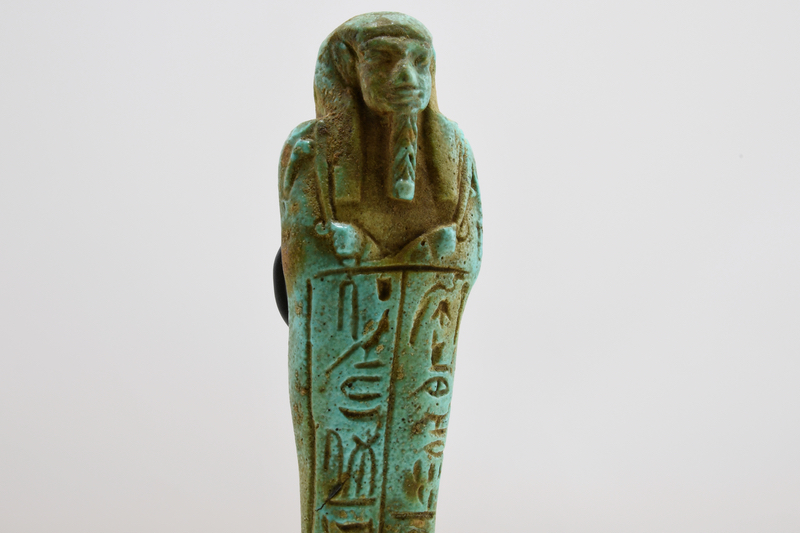
This mummy-like figurine, known as an ushabti, holds significant importance in ancient Egyptian funerary practices. Egyptians crafted these small ceramic objects, often using faience, to serve as surrogate servants for the deceased in the Afterlife. This particular...
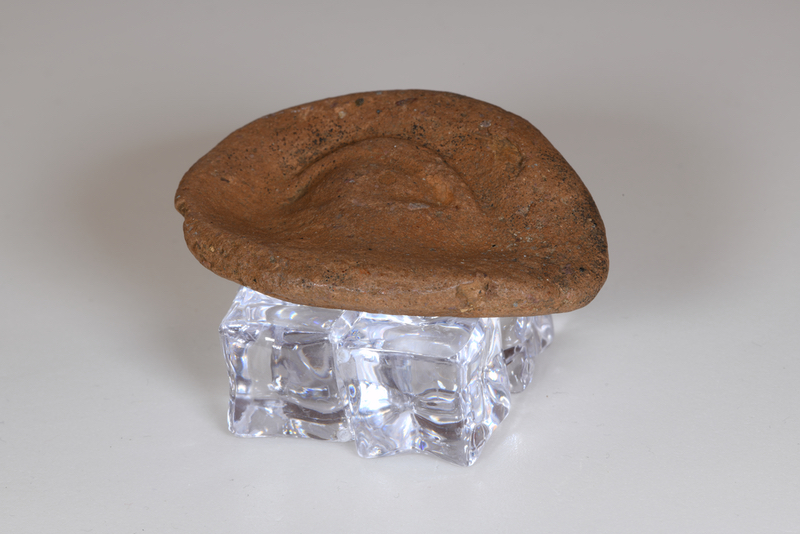
This clay eye is an example of an anatomical votive most likely dedicated to a healing deity. The dedicator of this clay eye may have been vision impaired and was seeking help from a healing god, such as Asclepius. Practically any body part that was in need of healing...